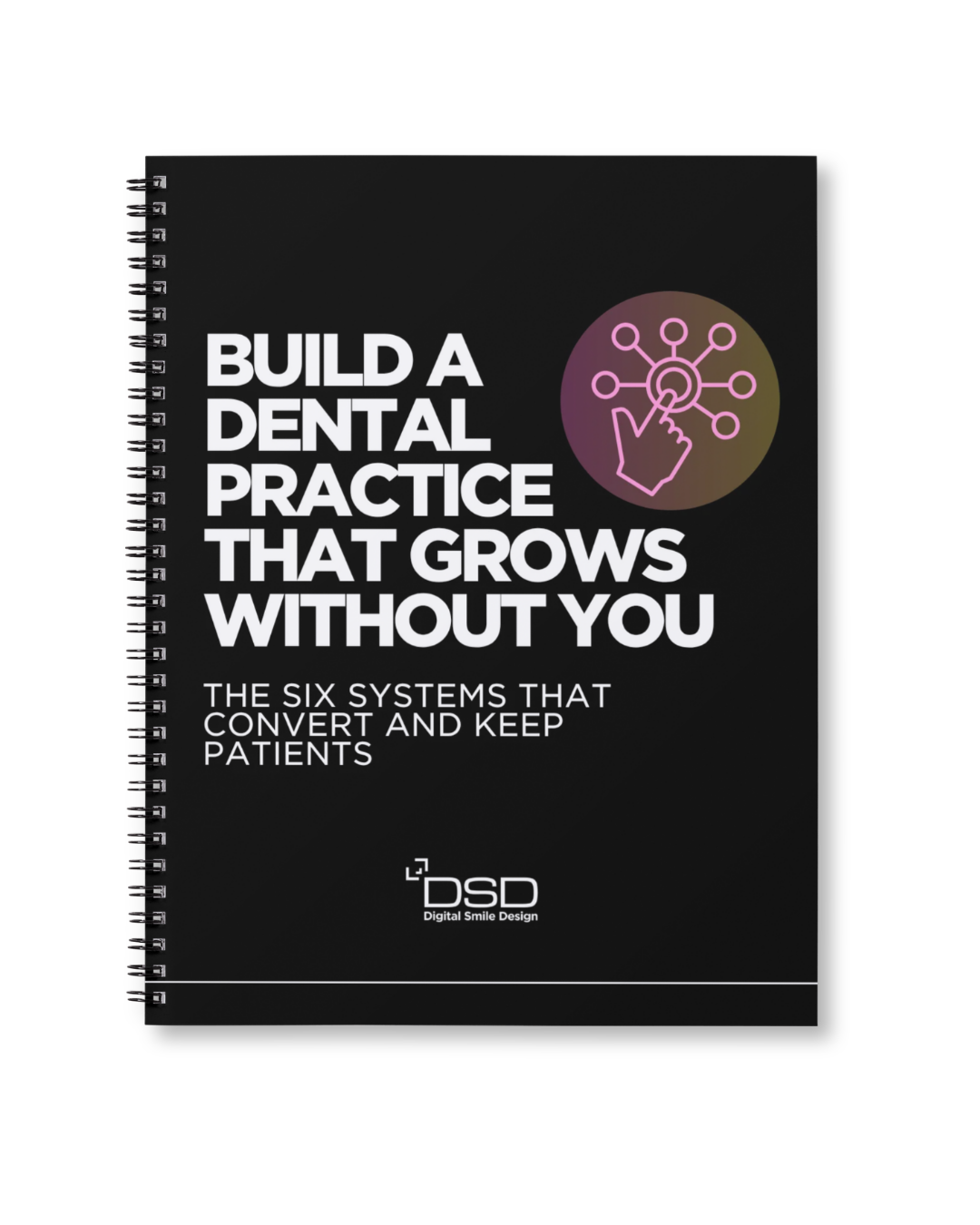
Any practice that runs on the know-how and memory of one person is not built on solid ground. It doesn't matter how good that person is. When the work depends on someone remembering to do it, the practice can only move as fast as they can, and it stalls the moment they're busy or gone. This free guide shows you the six systems every practice runs on, which of yours depend on a person, and what to build so they don't.
The full build guide, free. Yours to keep. It leads into a 4-minute self-assessment that scores your practice system by system.
FREE GUIDE
Most practices lose patients in the gaps, not the chair. Enter your details below to download the build guide instantly.

THE PROBLEM
Most practices don't lose patients because of bad dentistry. They lose them in the gaps: the inquiry that waited until morning, the treatment plan that never got a proper follow-up, the happy patient who was never asked to refer. Those gaps exist because the work depends on someone remembering to do it. When that person is busy, the follow-up waits. When they leave, it walks out the door.
A real system doesn't depend on memory. It runs on three things: a clear owner, a defined process, and a recurring rhythm. The question is which of your six systems already work that way, and which are being held together by a person.
INSIDE THE GUIDE
This is the download. The full architecture behind the six systems: two engines and six systems, laid out so you can see what each one does, what the system handles automatically, and what your team actually touches.
Once you've read the guide and know what good looks like, it leads you to a free online self-assessment, separate from the download: 24 questions, four for each of your six systems, scored red, amber, or green in under four minutes. It shows you where you stand and which system to fix first. Most practices find the systems closest to the chair are strongest, and the ones furthest from it (qualification, conversion, amplification) are where patients quietly fall through.
The six systems the guide covers:
Why more leads rarely fix the problem.
The response speed that decides who wins the patient.
Closing the gap between booking and consultation so they show up.
What to do with the 60% who say they will think about it.
Keeping the door open with the patients you already have.
Turning happy patients into referrals and reviews, on purpose.
The staffing model: the handful of seats a working system needs, and the one split most practices get wrong.
A reframe worth sitting with: a $3M practice can lose around $265,000 a year to slow response alone, and a typical $2-3M practice has roughly $1.5M in deferred treatment plans sitting unworked. None of that is a marketing problem. It is a systems problem, and systems can be built.
WHO THIS IS FOR
This is built for practice owners and office managers at established practices who can feel the dependency: the sense that if you stepped back for a month, things would slip. If your practice is busy but everything still runs through one or two key people, the guide will show you exactly where that dependency lives, and the diagnostic will show you what to build first.
Running a busy practice but aware that if you stepped back for a month, things would slip. Revenue looks fine until you look at what's sitting in deferred plans and unconverted consults.
Managing day-to-day operations across qualification, follow-up, and patient communication — stretched too thin to do any of it consistently.
Spending time chasing deferred patients reactively, with no system dictating when to contact them or what barrier they're sitting on.
Technically excellent at dentistry but frustrated that the business side doesn't reflect the quality of care being delivered inside the building.
FAQ
Yes, completely free. This is educational content from DSD — no purchase required. You can unsubscribe from follow-up emails at any time.
PDF, 12 pages. Readable on any device. A copy is also emailed to you immediately after you download.
The diagnostic is the actionable layer. Once you've read the guide, it leads you to a free online self-assessment: 24 questions that score each system red, amber, or green and tell you which one to fix first. It's the part most people spend the most time on.
You can't fix all six systems at once, and you don't need to. Get the guide, see how the six systems fit together, then take the diagnostic to find the reddest one and start there. Both are free.