Your Basket (0Items)
Your basket is empty
Product successfully added to basket!

Understand why a smile looks right, and how to make it happen every time.
The complete smile design journey with Christian Coachman — from understanding the principles, to thinking like a designer, to executing restorations yourself.
Created by Dr. Christian Coachman
Introduction
Watch Christian introduce the program
The Challenge
If any of these sound familiar, this program is built for you
-
You can see something is wrong, but not exactly why.
That gap between sensing a problem and naming it is the difference between a judgment you can act on and one that stays just out of reach.
-
You don't get back from the lab the design you had in mind.
And it is never quite clear whether the instructions fell short or the technician did, so the same misunderstanding repeats on the next case.
-
When a smile design needs doing yourself, you can't yet do it.
Whether it is a direct mock-up, a direct composite, a CAD project or a refinement to a provisional, the moment you cannot outsource is the moment the gap in your own hands shows.
-
You can't fully judge returned work or instruct the changes it needs.
If you cannot name precisely what is wrong and communicate it clearly, corrections turn into redos and back-and-forth, and every round costs you time and a patient's patience.
-
Patients take your artistic eye for granted.
They see a good clinician, not a smile designer, and without that distinction you compete on price instead of on the thing only you can do.
-
Clinical skill and smile design skill are not the same thing.
It is easy to assume one follows the other, and that assumption is exactly the blind spot this program is built to reveal.
Overview
What is Designing Smiles with Christian Coachman
Designing Smiles is an advanced program for restorative dentists, planners, designers and technicians who want to master smile design — from the thinking behind it to the hands that execute it.
It gives you a systematic way to analyze, plan, communicate and refine smiles, so that quality stops depending on luck and starts depending on a method you control.
The journey runs across three modules
Module 1 — Smile Design Fundamentals
Online, On-DemandThe awareness layer: see how much your smile design can improve and learn the principles that guide it.
View module detailsModule 2 — Esthetic Intelligence
2D Hands-onPut the fundamentals into practice with guided drawing and design exercises.
View module detailsModule 3 — Designing Restorations from Good to Great
3D Hands-onApply the approach to complex, compromised cases from diagnosis through execution.
View module detailsChoose Your Path Through the Program
How the three modules fit together
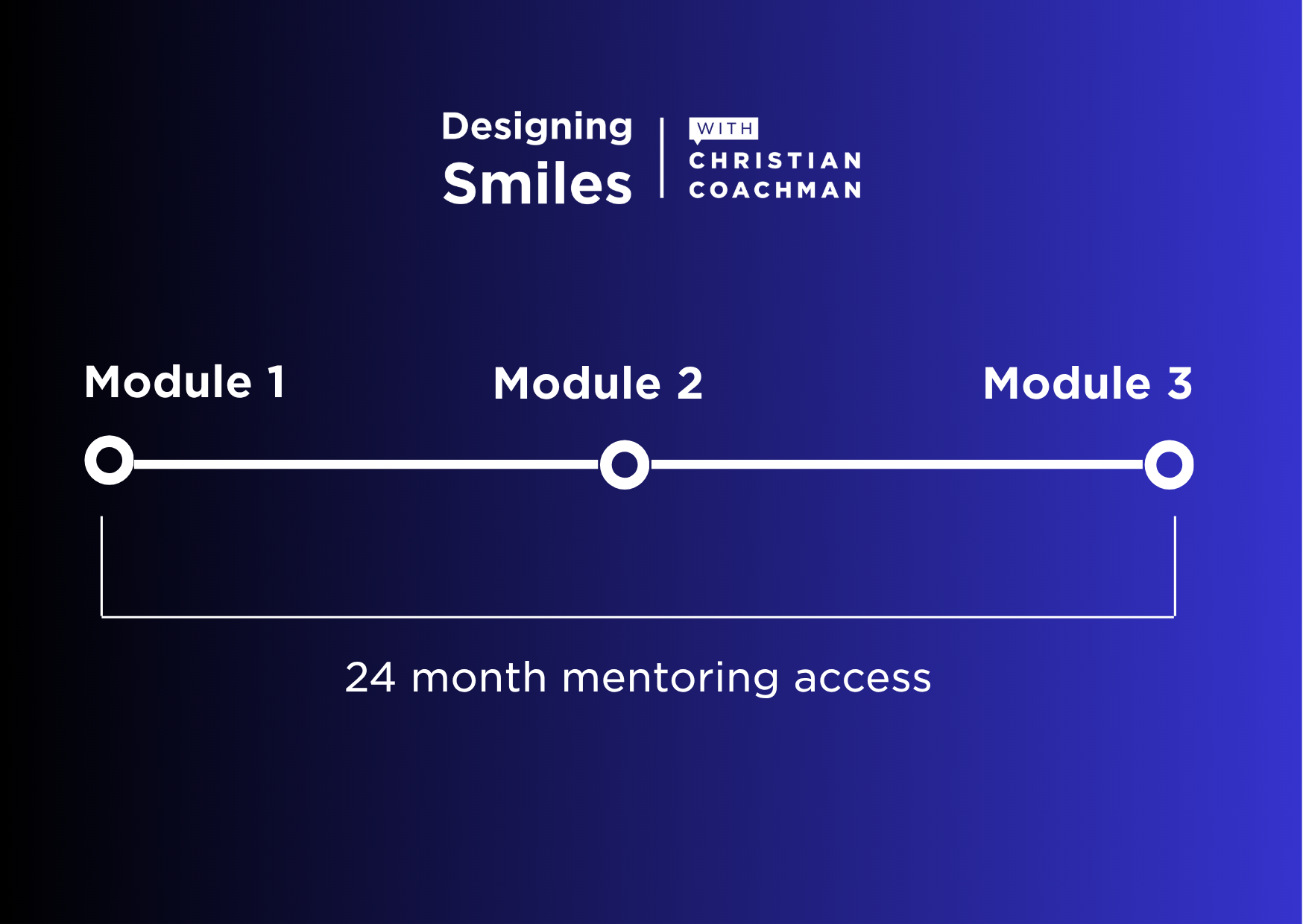
The recommended path is Module 1 online, Module 2 the same year, and Module 3 the year after.
| Module 1 | Module 2 | Module 3 | |
|---|---|---|---|
| Focus | Smile Design Fundamentals | Esthetic Intelligence, 2D Hands-on | Restorations from Good to Great, 3D Hands-on |
| What it builds | Understand smile design | Learn to think like a smile designer | Develop the hands to execute and refine |
| Format | Online, On-Demand | Online, On-Demand | In-Person |
Included with your enrollment
The 2-Year DSD Coaching & Mentorship Safety Net
When you enroll in the Designing Smiles program, you aren't just buying access to videos or a weekend course. You are securing two-year mentoring access directly with Christian Coachman inside our learning and discussion platform, DSD Online.
Share your real cases, ask your questions, bring a smile you're stuck on, and get his ideas and direct feedback. The same thinking he brings to the dentists he works with most closely, for two full years.
Free Preview Class
The Art of Smile Design
Christian Coachman traces the connection between art and dentistry back to the moment in art school that changed his career, then shows how the principles great artists use, light and shade, balance, proportion, composition, are the same ones that separate a beautiful smile from an artificial one. It is the lens that changes how you see every case. Watch the full 51-minute class, free.
What You'll Gain
Program outcomes
By the end of the program you will be able to:
- Analyze smiles — what is visually comfortable and what is not, according to esthetic norms.
- Instruct the lab or designer to perform smile designs.
- Perform smile design projects yourself, analog or digital, for both diagnosis and restoration.
- Evaluate smile designs done by others.
- Communicate changes clearly so others can execute them.
- Make smile design adjustments with your own hands — in software, on a physical model, or in the mouth.
- Interact with the patient about smile design: listening, interpreting, explaining and convincing.
The Bigger Picture
Why It Matters
Smile design quality determines the esthetic outcome of the treatment. For patients the esthetic outcome represents the quality of the whole treatment.
Smile design guides treatment planning. Adequate smile design will function as an adequate reference for planning decisions.
Smile Design influences the case acceptance process. A quality smile design process strengthens the emotional link between patient and treatment plan.
Your Instructor
Meet Dr. Christian Coachman
Dr. Christian Coachman
Founder, Digital Smile Design
Designing smiles has been my life's work. I started in the nineties as a ceramicist in my father's lab, worked as a smile architect for some of the best dentists in Europe, and went on to found Digital Smile Design. What I learned across thirty years is that delivering great smiles and knowing how to teach others to deliver them are two different things. This course is the culmination of that: every principle and every trick I developed, condensed to be genuinely effective.
"To deliver confidence, we need to be great smile designers. Confidence comes from designing smiles in a way that people will love themselves even more because of our work."Dr. Christian Coachman
The Curriculum
Module breakdown
Module 1 — Smile Design Fundamentals
Understand smile design · Online, On-Demand
Master the principles that separate intuitive esthetics from systematic smile design. This foundational module introduces the science and art behind modern smile design.
You will learn how to analyze smiles, understand facial, dento-gingival and occlusal relationships, apply the Smile Frame methodology, and use smile design to improve diagnosis, treatment planning, communication and quality control.
By the end, you will understand not only what creates beautiful, natural smiles, but why every esthetic decision matters.
Learning objectives
By the end of this module you will be able to:
- Understand the core competencies behind Esthetic Intelligence and why smile design matters.
- Analyze smiles against the esthetic norms that govern facial, dento-gingival and occlusal relationships.
- Apply the Smile Frame methodology and its ten steps.
- Use smile design as the foundation for diagnosis, treatment planning, communication and quality control.
- Recognize how airway, occlusion, facial proportions and the lip factor influence design decisions.
Program
Class 1: The Why
Class 2: Smile design evolution
Class 3: The guidelines I
Class 4: The guidelines II
Class 5: The guidelines III
Class 6: Smile design and treatment planning
Class 7: Digital natural restoration
Class 8: Tutorial
Available formats
Online, On-Demand.
Price
$500
Module 2 — Esthetic Intelligence: 2D Hands-on
Learn to think like a smile designer · Online, On-Demand
Transform knowledge into practical design skills through guided drawing exercises and real-world workflows.
This hands-on module develops your Esthetic Intelligence by training your eyes to recognize esthetic problems, your brain to understand their causes, and your communication skills to guide laboratories and interdisciplinary teams with confidence.
Through structured exercises, quality control systems and restorative design strategies, you will learn to analyze, create, evaluate and communicate smile designs with the precision of a true smile architect.
Learning objectives
By the end of this module you will be able to:
- Apply core smile design concepts to real design work.
- Plan treatment guided by smile design, using the Dento-Facial Guidelines and the Smile Frame in ten steps.
- Complete Smile Frame and dento-gingival drawing exercises by hand.
- Run a proactive quality management system and use quality control checklists.
- Communicate designs asynchronously and visually to guide the lab and the wider team.
- Build a high-performance dentist-lab restorative workflow.
- Begin overcoming restorative compromises using optical illusion, and understand why restorations look fake.
Program
Class 1: The How
Class 2: Facially Driven Dentistry
Class 3: The Esthetic Zone
Class 4: Smile Design Quarterback
Class 5: Dentist-Lab Synergy
Class 6: From Good to Great
Available formats
Online, On-Demand.
Price
[[PRICE — MODULE 2 — to be supplied]]
Module 3 — Restorations from Good to Great: 3D Hands-on
Develop the hands to execute and refine · In-Person, two days
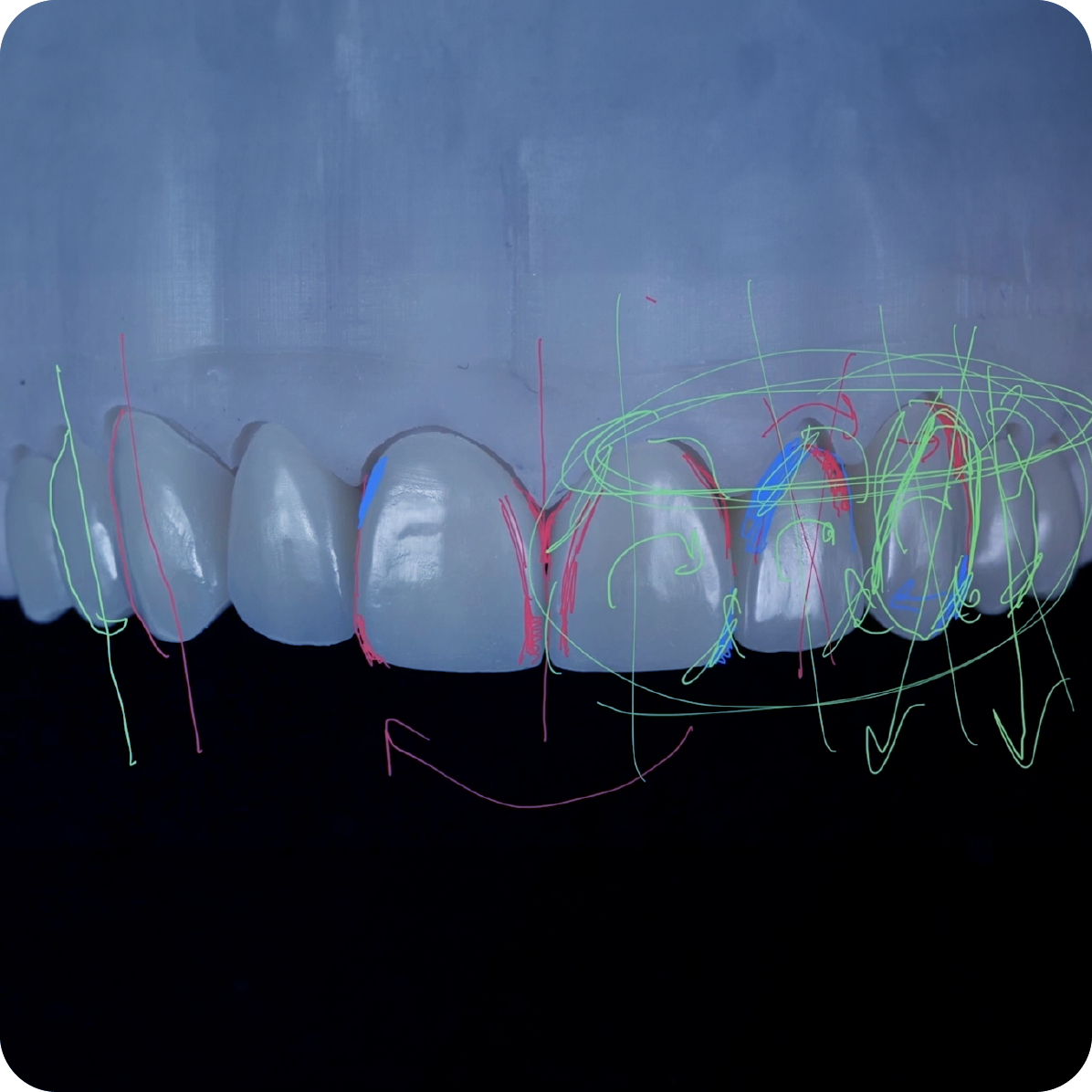
Bring your smile designs to life by learning how to solve the restorative compromises that separate good dentistry from truly exceptional dentistry.
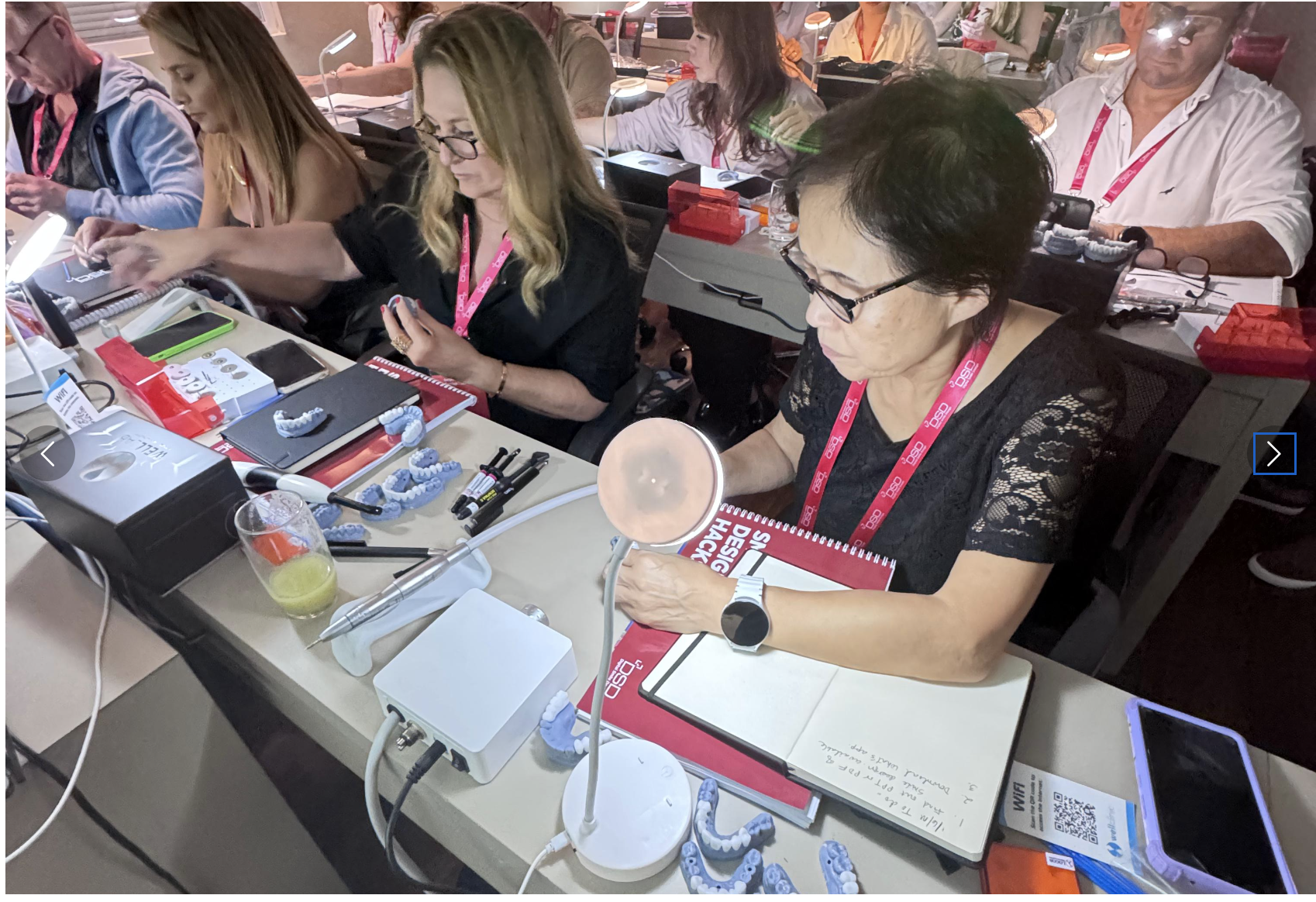
Across two intensive hands-on days, you will work through six of the most common esthetic challenges, combining diagnosis, digital design, visual communication, CAD software workflows and practical model exercises.
More importantly, you will develop the artistic judgment and manual skills to refine restorations yourself — digitally, on the model or chairside — so you can consistently transform acceptable restorations into natural, harmonious and highly esthetic outcomes.
Learning objectives
By the end of this module you will be able to:
- Diagnose esthetic problems and build a design strategy for six common compromised situations.
- Refine restorations by hand on the model, and understand how those refinements translate chairside.
- Apply the Pink Restoration design strategy for artificial pink and gingival challenges.
- Consistently move restorations from good to great through diagnosis, design and manual refinement.
Program
Day 1
- 8:30–9:30 Registration and coffee
- 9:30–12:00 Class 1: Main concepts overview
- 12:00–13:00 Lunch
-
13:00–15:30
Class 2: Compromised situation 1, making teeth look longer / narrower.
- Esthetic diagnosis with Keynote/Canva
- Design strategy
- Visual asynchronous communication workshop
- Demo execution on Exocad
- Hands-on model 1
- 15:30–16:00 Coffee break
-
16:00–18:30
Class 3: Compromised situation 2, making teeth look shorter / wider.
- Esthetic diagnosis with Keynote
- Design strategy
- Visual asynchronous communication workshop
- Demo execution on Exocad
- Hands-on model 2
- Welcome drinks
Day 2
-
9:30–12:00
Class 4: The Pink Restoration design strategy. Compromised situation 3, from fake/bulky to natural/delicate, and compromised situation 4, fixing axis and interproximal areas.
- Esthetic diagnosis with Keynote
- Design strategy
- Visual asynchronous communication workshop
- Demo execution on Exocad
- Hands-on models 3 and 4
- 12:00–13:00 Lunch
-
13:00–15:30
Class 5: The Pink Restoration design strategy. Compromised situation 5, ideal design for artificial pink.
- Esthetic diagnosis with Keynote
- Design strategy
- Visual asynchronous communication workshop
- Demo execution on Exocad
- Hands-on model 5
- 15:30–16:00 Coffee break
-
16:00–18:30
Class 6: Compromised situation 6, avoiding the "banana look".
- Esthetic diagnosis with Keynote
- Design strategy
- Visual asynchronous communication workshop
- Demo execution on Exocad
- Hands-on model 6
- Conclusions
Available formats
In-Person, two days.
Price
[[PRICE — MODULE 3 — to be supplied]]
Enroll
Choose your module and enroll
Module 2 — Esthetic Intelligence, 2D Hands-on
[[PRICE — MODULE 2 — to be supplied]]
Online
Module 3 — Restorations from Good to Great, 3D Hands-on
[[PRICE — MODULE 3 — to be supplied]]
Madrid
2-3 October 2026
Design Moments
The three types of design you will work with
Across the program, the technical work is organized around three moments of design. Together they cover the full arc from first diagnosis to final restoration.
The Diagnostic Design
The Diagnostic Design is done before any treatment is performed. It is the ideal, facially and airway-driven functional-esthetic design that shows the discrepancy between where the patient is and where they should be.
It is not limited by any existing compromise, and its purpose is to guide the interdisciplinary exploration phase, the decision making, and the search for the best comprehensive treatment plan.
The Restorative Design
The Restorative Design is done before tooth preparation, when restoration is the only treatment left to plan — either because the case is restorative only, or because all other procedures are already complete.
It is performed after any ortho, perio, surgery or endo, and before restoration. Because only restorations and tooth reshaping are possible at this stage, this design guides the preps, the provisionals and the final restorations.
The Restoration Design
The Restoration Design is done after tooth preparation. It is shaped by the finishing lines of the preps, the minimum thicknesses of the restorations, the position of implants and gingiva, and the biomechanics of the materials.
This is the design used to manufacture indirect restorations.
Testimonials
What dentists and technicians say about the course
… shift anatomy and perception …
“I think any dentist who wants to get a better understanding of how you can shift anatomy and perception without necessarily having to make massive changes, how you're able to blend things and hide things so that they look nice, I think that's the perfect dentist to come to this course. Anybody who just wants an understanding of how to improve these little details and touches that really can make the big difference in a case, that's who this course is geared towards.”
… the artistry of smile design …
“Any dentist that likes the artistry of smile design and likes to communicate well with their lab could highly benefit from this course. There were definitely some things I have learned that I never realized when I'm looking at teeth all day individually. Like, you know, when you're stepping back and looking at the big picture and the smile frame.”
… an absolutely essential course …
“I wish I had this course in the beginning of my career. The Designing Smiles course is an absolutely essential course for somebody who wants to pursue esthetic and cosmetics in dentistry.”
The course has exceeded my expectations …
“The course has exceeded my expectations. What I really wanted out of it was the ability to talk to the lab and have better communication with the lab so that I could actually work as their team member to make smiles better. And not only have I now learned some of the language and now know what to look for when building a smile, but I've got some techniques myself so that even if I'm making temporaries or transitionals in the mouth, I'm going to be significantly better at it.”
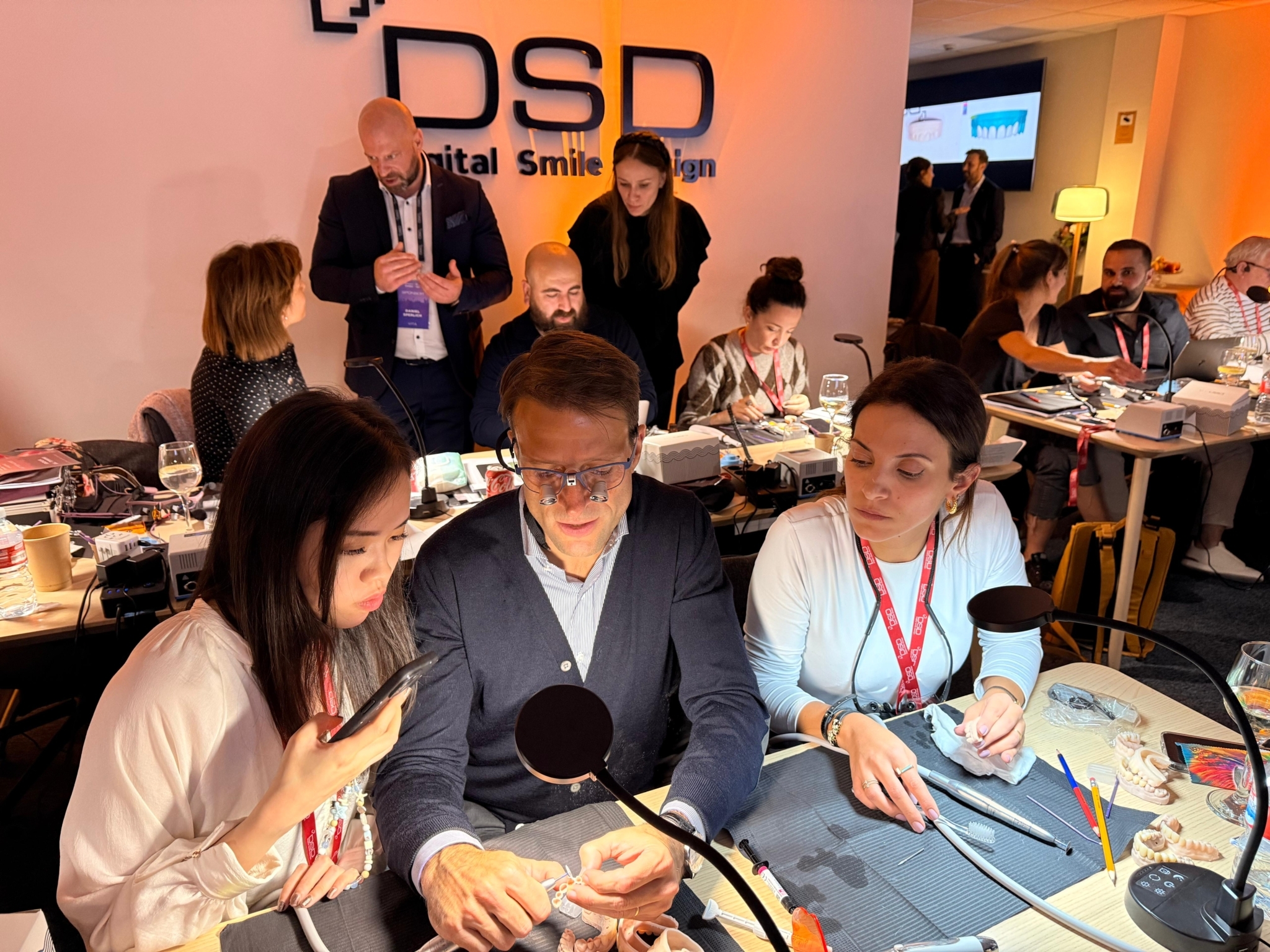
From the Courses
Gallery
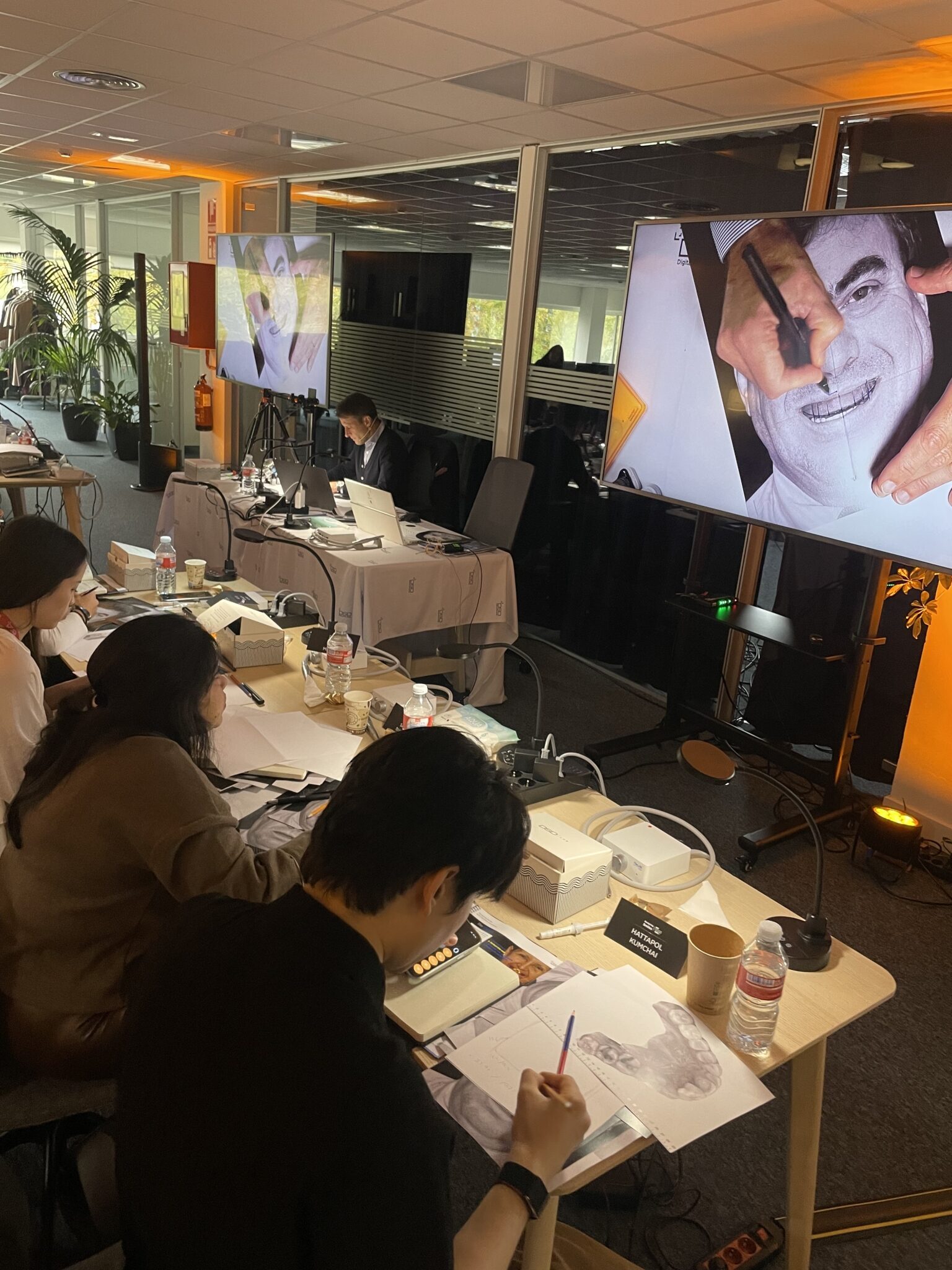
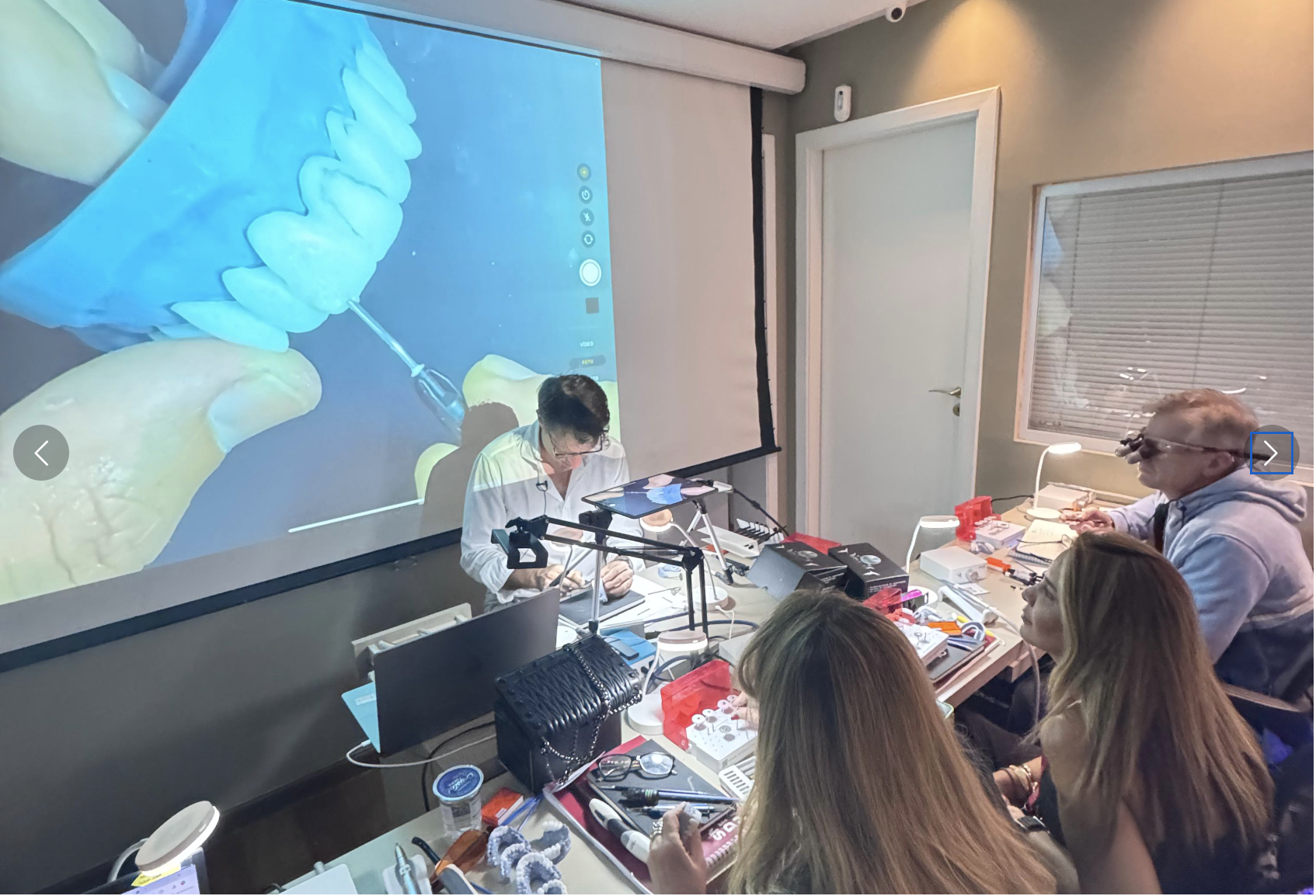
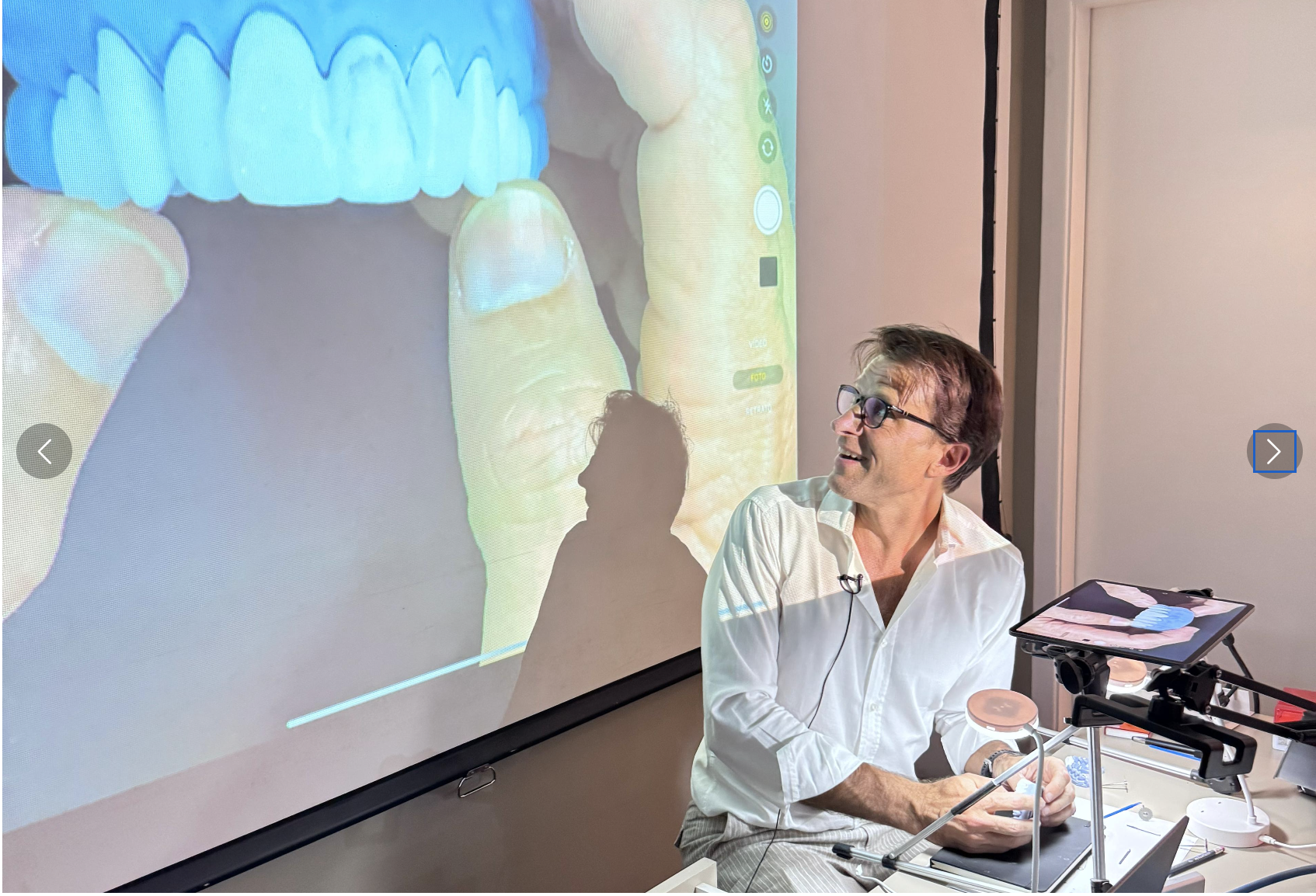
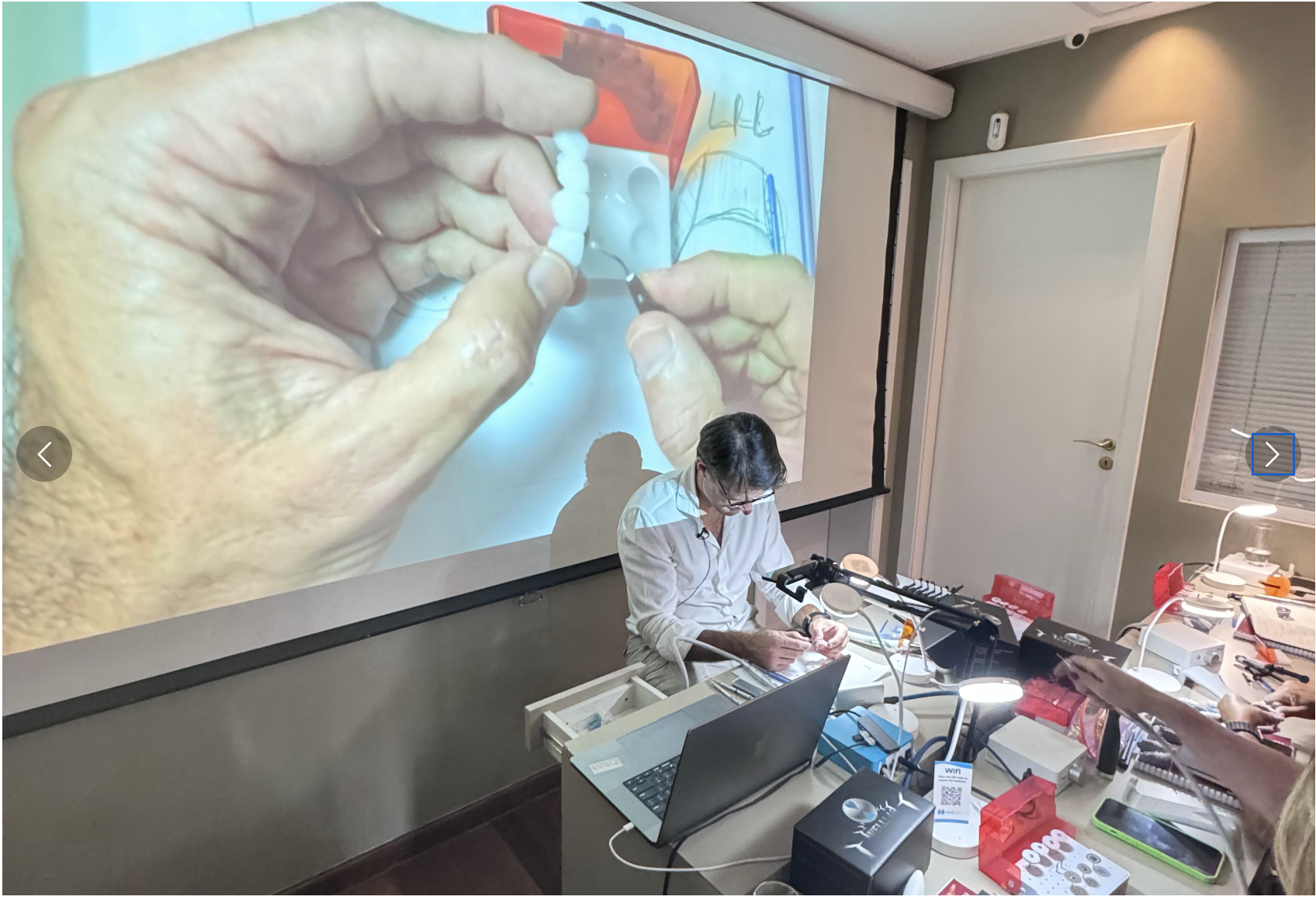
Frequently Asked Questions
Questions about the program
Do I need to complete Module 1 before Module 2 and Module 3?
Module 1 is not a strict prerequisite, but it is strongly recommended. It builds the awareness and the principles the hands-on modules rest on, and it includes the Keynote and PowerPoint tutorials you will use in the later modules, so that you can follow the exercises actively rather than just watch. Within the hands-on path, Module 2 comes before Module 3. The ideal route is to take Module 1 online, book Module 2 in the same year, and take Module 3 the year after.
Can I take the modules separately, or only as the full program?
You can take them separately. Each module is sold on its own, and Module 1 stands alone as a complete first step. Most people follow the full journey over two years, but you are free to choose the module that fits where you are right now.
What is included in the two-year mentoring access?
From the day you enroll in any module, you join DSD Online and get two years of mentoring access with me. You can share your cases and receive my suggestions, ideas and feedback directly, before, during and after the courses. It is ongoing support across the full two years, not a one-off.
Is Module 1 worth taking on its own?
Yes. Module 1 is designed as an eye-opener. Its most important job is to show you how much your smile design can improve and to create awareness of the areas most dentists never explore. Even the best restorative dentists are beginners at smile design, and this module challenges you to see where you really stand. On its own it gives you the artistic principles, the link between smile design and treatment planning, the concept of digital natural restoration, and the software tutorials that prepare you for everything that follows.
What are the formats?
Module 1 and Module 2 are online and on-demand, so you can take them at your own pace. Module 2 includes 2D hands-on drawing work you complete at home. Module 3 is in-person across two intensive days.
What software or tools do I need for the hands-on work?
Who is this program for?
It is built for restorative dentists, planners, designers and technicians. The principle behind it is that every dentist is a beginner at smile design, so it serves everyone from young dentists opening their minds to the skill for the first time, to the most experienced restorative dentists who want to stop depending on the lab and become exceptional.
What happens after I enroll?
The moment you register, you join DSD Online and your two-year mentorship with me begins, so you are connected from day one and can start sharing cases straight away.
Ready to begin?
Choose your module and get started
Start with the foundations or step in at the module that fits where you are right now.
Partners & Accreditation
This course takes place in partnership with:

This course is sponsored by:

Continuing Education Credits
Digital Smile Design is proud to offer 32 Continuing Education (CE) Credits for this course through our collaboration with Dental Academy USA, a PACE Approved organization affiliated with the Academy of General Dentistry (AGD) #420360. The AGD represents a prestigious community, dedicated to the support and advancement of general dentists, by providing valuable resources aimed at enhancing their practices and the quality of patient care.