
DSD Aligners | Direct-Printed Aligners for Restorative Cases

Product successfully added to basket!

DSD Aligners, powered by Digiline — brand lockup

An aligner system built around your restorative plan, not the other way around.

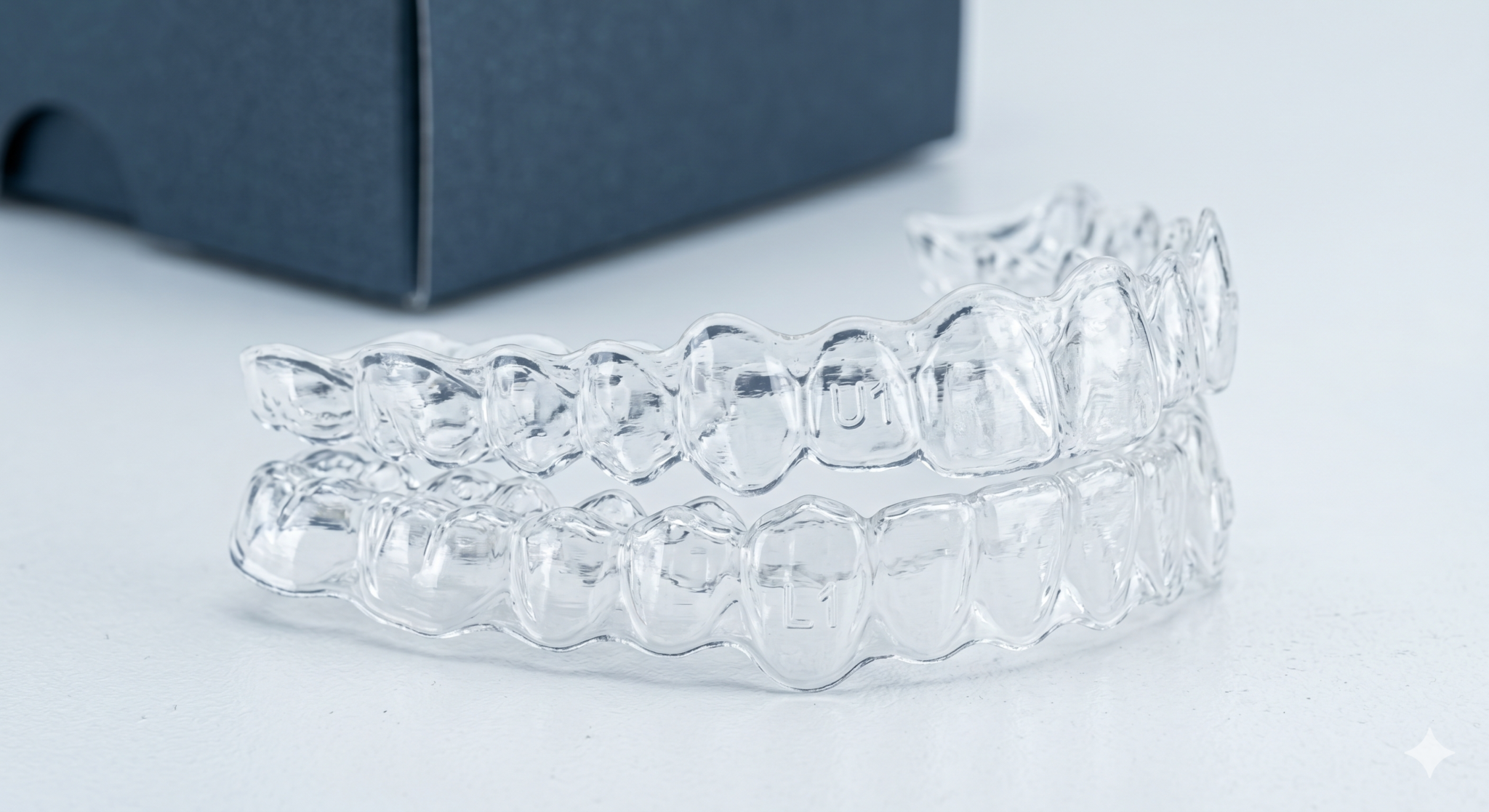
Introducing DSD Direct Print Aligners. Restorative-led, built for the cases where a comprehensive plan is the hero.

Exclusive paid beta, open now to US DSD providers and clinics. Apply to the Beta

A personal invitation from Daniel Ramos, Clinical Director, DSD

Dear DSD colleague,

In comprehensive dentistry, the orthodontic phase plays a key role in achieving the final restorative vision we design for our patients. At DSD, our philosophy has always been clear: we design the final smile first. We know where every tooth needs to end up, not because of an abstract Class I ideal, but because of the face, the lips, the gingival architecture, and the restorations we've planned. Then we select the orthodontic tools that will help us reach that outcome.

Today, we have access to a wide range of aligner systems and orthodontic approaches, each with proven clinical value. As a Planning Center, DSD continues to support and work with all of them, helping you choose and apply the best solution for each individual case.

At the same time, digital dentistry continues to evolve, and new technologies are expanding what is possible in aligner therapy. We're excited to introduce DSD Direct Print Aligners, developed in partnership with Digiline. This technology offers a different manufacturing approach and brings several unique capabilities to your practice. DSD is fully prepared and trained to support you with this new tool, so you can integrate its benefits seamlessly into your existing workflow.

DSD Direct Print Aligners are different, starting at the manufacturing level. They're directly 3D-printed from a digital file. That single change opens up everything else:

We can vary the thickness across a single aligner to place force exactly where a tooth needs it, which means we don't need composite attachments to redirect forces for the first twelve stages of treatment. We can use a shape-memory resin that the patient reactivates in hot water before each insertion, which means the aligner behaves like a brand-new appliance every single day, not just on day one of each tray. And we can plan every movement inside our Treatment Planning Service, staged not by an algorithm optimizing for straight teeth, but by a DSD clinical team working backward from your final restorative design.

I'm inviting you to test this on one of your own patients before the rest of the market sees it. We're opening a strictly limited paid beta to US-based DSD providers and clinics, at founder pricing, with the full TPS service and Grin remote monitoring included. Submit one qualifying case. Run it alongside whatever you're using today. Explore this new option with one of your patients and evaluate how it fits within your current approach.

Daniel Ramos, Clinical Director of DSD
Daniel Ramos Clinical Director, DSD

This is shape memory.

Most clear aligner materials lose a significant portion of their active force within the first hours of wear. The force curve is front-loaded, which is why the standard protocol is to replace the tray every week or two. DSD Direct Print Aligners are built from a proprietary shape-memory resin. They can be crumpled into a ball and restored to their original prescribed shape in hot water, which is exactly what happens every morning, when your patient reactivates the aligner before insertion.

Every day of wear behaves like day one.

What changes when the aligner is built for the plan

Three capabilities that expand what's clinically possible when the manufacturing method isn't the limit.

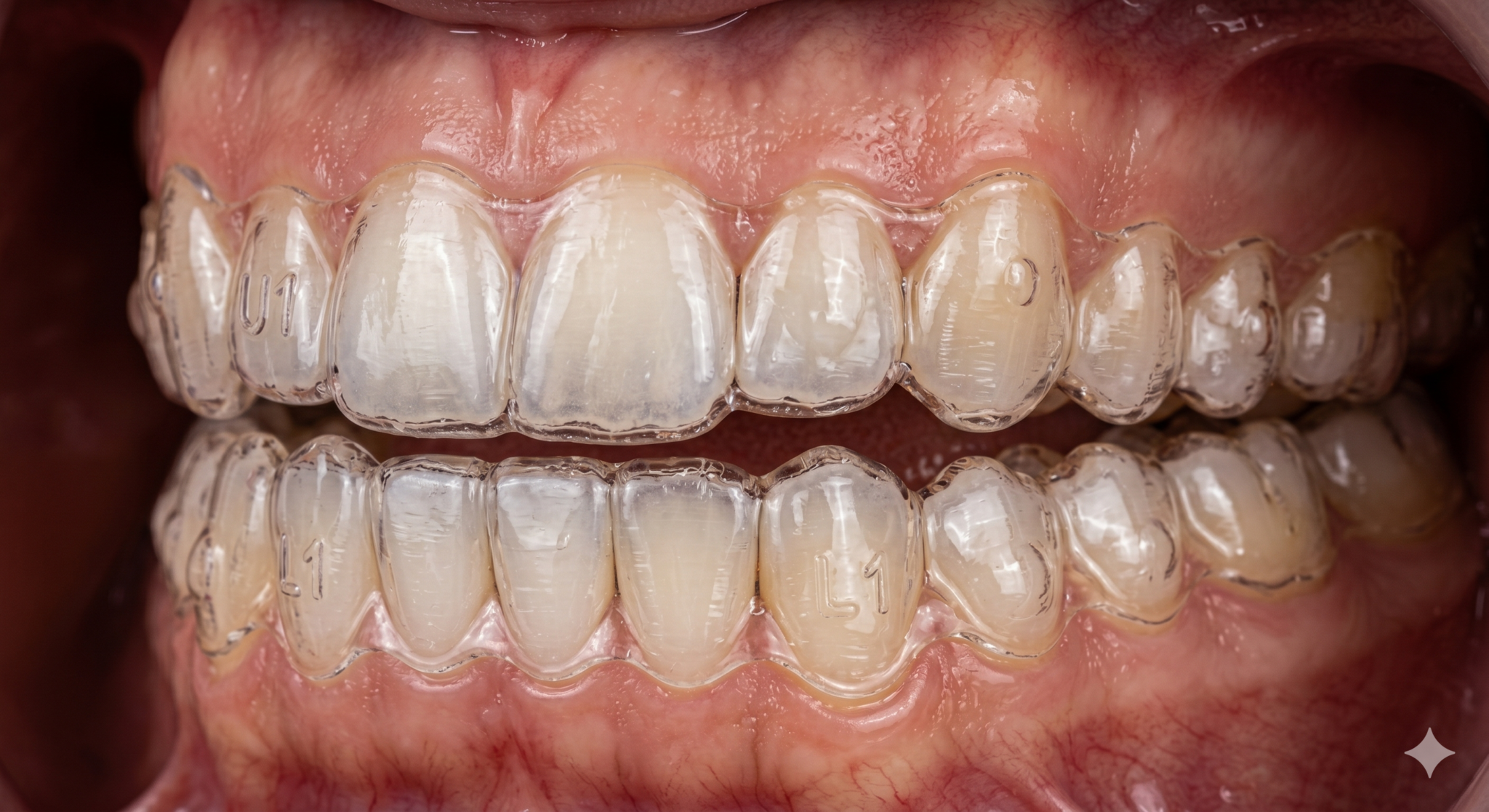
Intraoral macro of upper-arch aligners seated on teeth, with no composite attachments visible on any tooth surface.

No attachments for the first twelve stages

With thermoformed aligners, composite attachments are the standard tool for orthodontic leverage, and for most cases, they do exactly the job they're designed to do. But for aesthetic cases specifically, composite bumps bonded to the front teeth of a patient who came to you for aesthetics are a real-world tradeoff. It's a strange thing to ask of someone seeking an invisible treatment.

DSD Aligners don't need them, not for the first twelve stages. The aligner itself generates the force vectors, directly from its own variable geometry. After those first twelve stages, we reassess together and decide whether attachments are needed for the next phase. For many cases, they aren't.

What this gives you

a patient who doesn't hide their smile for six months of treatment, and roughly an hour of chair time back per case that used to go to placing, adjusting, and removing composite.
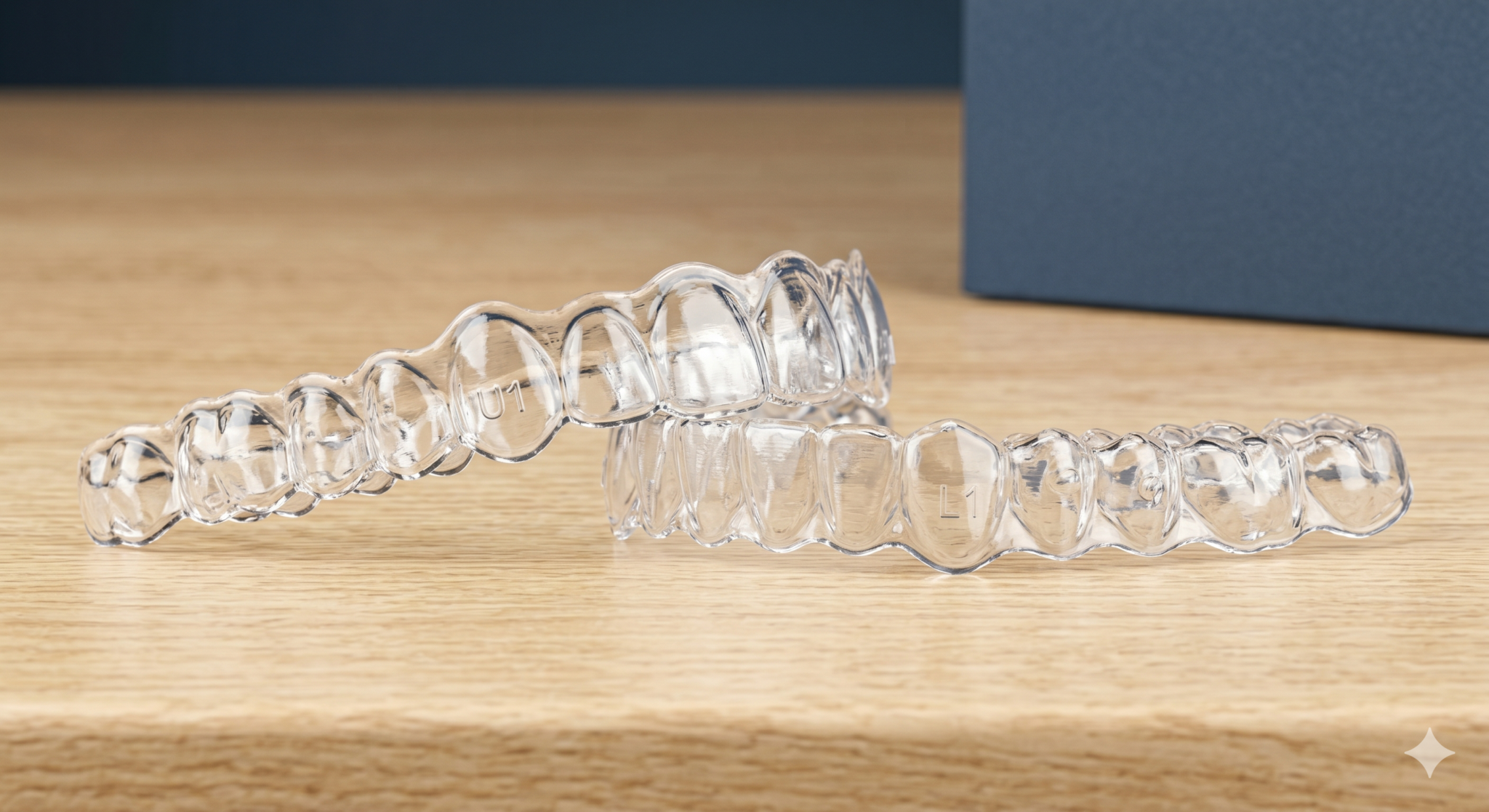
Two DSD Aligners resting on a warm wood surface, with a navy DSD product box softly out of focus in the background.

Full force, every day of wear

Traditional aligner materials lose a significant portion of their active force within the first hours of insertion; roughly 75% decay in the first three hours is well documented in the literature. This force curve works. It's how aligner therapy has delivered results for two decades. But it means most of each tray's movement happens in the first day of wear.

DSD Aligners use a shape-memory resin. The patient drops the aligner into hot water before insertion, the polymer chains realign into their original configuration, and the aligner seats as if it's the first time. Every day. Every insertion. A full fourteen days of active force instead of concentrated force on day one.

What this gives you

predictable tooth movement, a closer match between what you planned in the software and what you see in the mouth, and fewer refinement cycles pushing your restorative delivery date back.

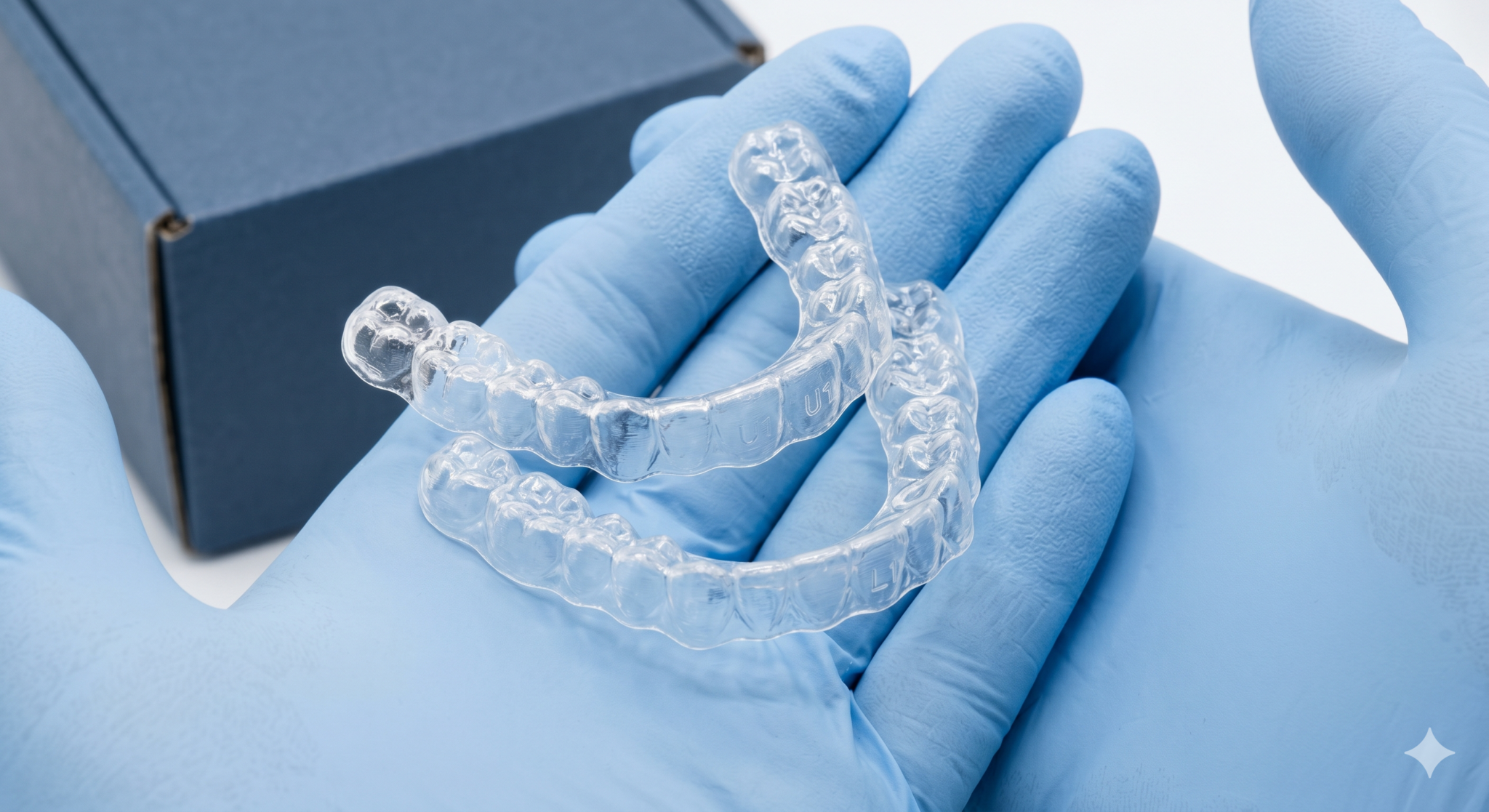
Gloved clinician hands holding a pair of DSD Aligners, with the navy DSD product box visible in the frame.

A treatment plan that serves the final restoration

Every DSD Aligner case is staged by our Treatment Planning Service; a DSD clinical team working backward from your final restorative design. We know where the veneers are going. We know where the gingival margins need to sit. We know which teeth are being restored and which are staying natural. The movement plan reflects all of it, guided by the restorative end-state rather than a general orthodontic ideal.

Unlimited Grin remote monitoring is built into every case, so you can verify the plan is tracking between visits, giving you continuous visibility into treatment progress rather than waiting for the next in-office appointment.

What this gives you

an orthodontic phase that ends exactly where your restorative phase needs to begin, with a predictable timeline you can commit to in front of the patient.

The technology that makes this possible

For clinicians who want to understand what's different at the manufacturing level.

Traditional clear aligners have been manufactured the same way for roughly two decades: a 3D-printed model is produced for each stage of treatment, a sheet of plastic is heated and vacuum-formed over the model, and the excess is trimmed off. The aligner is what's left. This process has delivered clear aligner therapy to millions of patients, and the systems built on it have produced excellent clinical outcomes for generations of cases.

It's also, by its nature, a process with specific physical constraints. A stretched sheet has roughly uniform thickness; you can't design extra material in one area and less in another. The shape of the aligner is determined by the model underneath it, which means the forces it applies come from the teeth, not from anything engineered into the tray itself. The sheet loses a percentage of its thickness during the stretch, and that loss varies slightly from model to model. These constraints shape which clinical movements thermoform handles beautifully and which movements require workarounds: composite attachments, overcorrection, additional refinement cycles.

Direct-print works differently.

DSD Aligners are 3D-printed directly from the digital file, with no model, no plastic sheet, no stretching. Each aligner is manufactured as the object it's supposed to be, layer by layer. That opens up three design capabilities that a thermoformed aligner structurally cannot have:

Capability 01

Variable thickness

Precisely thicker where the design calls for more force, thinner where it calls for comfort. The aligner's geometry becomes the force generator, which is why most cases don't require composite attachments for the first twelve stages.

Capability 02

Shape memory

A proprietary resin with a glass transition point above body temperature but below the temperature of hot water. The patient reactivates the aligner before each insertion and it returns to its original, prescribed shape, maintaining a more consistent force profile across the full wear cycle.

Capability 03

Anatomical fit

Direct-print captures detail that thermoforming is less suited to: undercuts, interproximal spaces, embrasure geometry. The aligner can grip the tooth surface itself, which reduces the dependence on external anchors for many movements.

Direct-print isn't a replacement for thermoform; it's a different manufacturing approach with different capabilities. For the kind of case DSD Aligners are built for, those capabilities matter.

Strictly limited. US-based DSD clinics only. Simple cases only. Founder pricing.

We're opening DSD Direct Print Aligners to a small group of US clinicians before the full commercial launch. It is a paid product order, but it's structured to give you a low-risk way to evaluate the technology in your own practice. You're invoiced two to three months in, once treatment is tracking well, not at the time of order.

What we're asking from you

Submit one qualifying clinical case. Run it the way you'd run any aligner case in your practice. Give us honest feedback on the workflow: the planning experience, the 3D viewer, the packaging, the patient experience, the Grin monitoring integration. We're using this phase to stress-test the systems around the product, not the product itself.

What you get in return

Founder pricing on the Lite package, locked in for the beta period. The full Treatment Planning Service included in every case. Unlimited Grin remote monitoring. Direct access to our clinical team for any case you run. And the ability to offer your patients a restorative-first aligner system before anyone else in your market can.

The beta is focused on simple cases only

Minor crowding, relapses, and pre-restorative setup. This is deliberate. Direct-print is at its strongest in cases that don't require complex biomechanics, and the simpler scope lets you evaluate the technology cleanly, with fast turnaround and minimal risk to your patient or your timeline.

Moderate and Comprehensive cases will be opened in later phases of the beta, once we've validated the workflow on simpler cases together. If you have a more complex case you'd like to discuss, mention it on the application; we'll let you know if it fits a future phase.

Two DSD Aligners (upper and lower arch) resting on a white surface, with a navy DSD product box in soft-focus background.

What's included in the Lite package

The Lite package is the only tier currently available in the beta. It includes the DSD Treatment Planning Service and Grin remote monitoring. Aligners ship in batches of twelve stages to maximize tracking accuracy. You're invoiced after treatment has begun, with no charge at the time of order.

Founder Beta 20% Off

DSD Lite

Minor crowding, relapses, pre-restorative setup.

Up to 15 stages per arch
Provider price $1,260 $1,575
DSD Clinic price $945 $1,181

DSD Clinics receive their standard 25% baseline discount in addition to the beta discount, reflected in the Clinic price. You're billed by invoice once treatment has begun; there is no charge at the time of order.

How the workflow works

  1. Step 01

    Apply

    Submit the form on this page with your contact details, your current aligner brand, your case volume, and a short note on why you want to join the beta.

  2. Step 02

    We review

    Our TPS clinical team reviews your application and the case you have in mind. We'll confirm whether the case fits the beta scope and admit you into the beta user group.

  3. Step 03

    Order the Lite package

    Once you're admitted, you'll see the Lite package available in your account. Place the order with no charge at this point. Submit your patient's records via our web portal, exactly like a standard DSD case.

  4. Step 04

    Review the plan

    You'll receive a secure link to the digital setup and the planned movements. Approve, request changes, or discuss with our clinical team.

  5. Step 05

    Print, ship, and monitor

    Your first twelve-stage batch and the Grin monitoring kit ship directly to your clinic. The patient scans weekly through Grin. We review superimpositions monthly to verify tracking before printing the next batch.

  6. Step 06

    Invoiced after case begins

    Once treatment has begun, you'll receive an invoice for the Lite package at beta founder pricing. No charge at order.

One case. Your patient. Your chair.

Direct-print is a new tool, and the best way to evaluate any new tool is on your own patient, in your own chair. Submit a simple case, minor crowding, a relapse, or a pre-restorative setup. Run it alongside whatever you're using today. See how it fits within your existing workflow.

The beta gives you a low-risk way to explore what direct-print can do, with full TPS support and Grin remote monitoring built into every case. Once it earns a place in your practice, you'll know it because you saw it work, not because someone told you it would.

If you're a US-based DSD clinic, we'd like to have you in this beta.

Daniel Ramos, Clinical Director of DSD
Daniel Ramos Clinical Director, DSD