
Your Basket (0Items)
Your basket is empty
Product successfully added to basket!
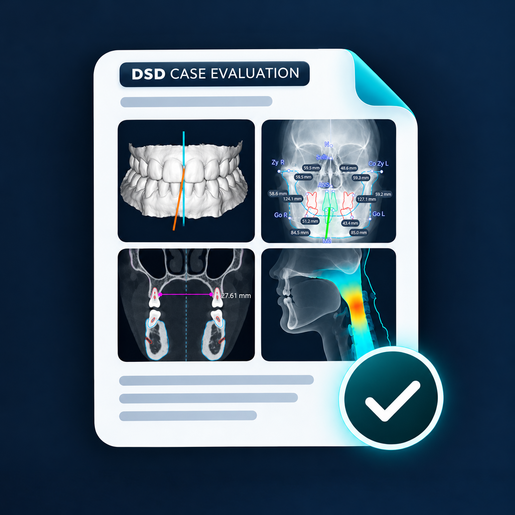
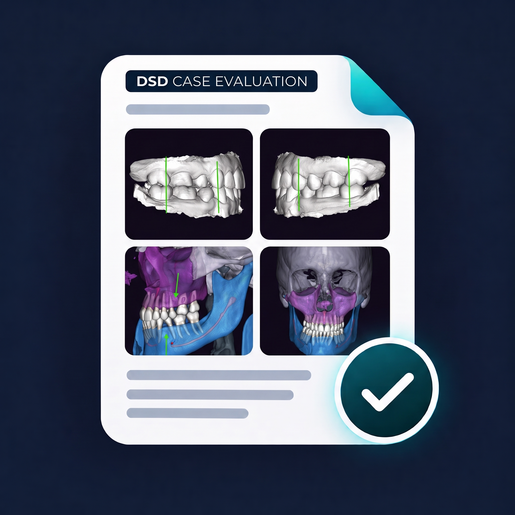
DSD Case Evaluation
DSD Case Evaluation is a comprehensive expert assessment for orthodontic and interdisciplinary cases. It integrates the available facial, dental, skeletal, radiographic, cephalometric, and airway-related information to identify the main findings, define treatment priorities, and provide a clear clinical roadmap for the next steps — including the most appropriate DSD planning workflow.
Features
Related Products

US$650.00
US$650.00

US$650.00
US$650.00

US$650.00
US$650.00
Clinical success begins with a profound understanding of the patient. The DSD Case Evaluation provides an expert, comprehensive review of patient records to identify key clinical findings, limitations, risks, and opportunities before initiating any procedure.
The goal is simple: understand the case entirely before designing the treatment.
Based on the submitted documentation, the evaluation synthesizes facial, dental, radiographic, skeletal, cephalometric, and airway-related analysis into a cohesive clinical diagnosis. Moving beyond a standard assessment, the report establishes a prioritized treatment strategy and sequence. It specifies therapeutic approaches, highlights variables to monitor, and identifies the exact timing for interdisciplinary interventions.
Finally, it bridges these clinical insights with the relevant DSD workflows, providing a continuous roadmap from initial planning and orthodontic execution through to quality control and final restorative phases.
Our DSD Case Evaluation is a comprehensive diagnostic tool designed to provide deeper clinical understanding before starting treatment. Whether utilized as a standalone product during the pre-case acceptance phase or combined with other DSD products, it provides a clear roadmap that ensures:
- Detailed Diagnostic & Risk Analysis: Clarifies the diagnosis, treatment priorities, limitations, potential risks, and recommended sequence before deciding how to move forward.
- Comprehensive Data Integration: Integrates all available facial, dental, radiographic, skeletal, transverse, and airway-related findings into a single, cohesive clinical interpretation.
- Interdisciplinary Workflow Alignment: Complements existing visual or treatment-planning products—such as Diagnostic Design, Ortho Planning, and Interdisciplinary workflows—by adding a detailed clinical layer.
- Advanced Clinical Support: Delivers essential diagnostic support for complex orthodontic and interdisciplinary cases, young patients, or airway-related concerns, giving you the confidence to start treatment.
The client will receive a structured PDF report providing a detailed clinical evaluation. Rather than merely describing findings, the report is designed to help the doctor define the most appropriate treatment pathway, establish priorities, and navigate potential limitations.
Depending on the available documentation, the evaluation is organized into key phases:
- Baseline Patient Assessments: Detailed evaluations covering facial, dental, radiographic, cephalometric, and airway parameters, alongside an initial case summary.
- Clinical Insights & Constraints: A clear outline of the main findings, identifying anatomical limitations, biological considerations, and providing expert feedback on your proposed plan.
- Proposed Treatment Pathways: Exploration of viable options and alternatives to help determine what should be addressed first and what requires further investigation.
- Execution Strategy: A recommended sequence of action, specifying the most appropriate DSD products and digital protocols to ensure a predictable result.
Please note that the delivery of reports depends on the Planning Center's capacity, availability, and the quality of the submitted records.
Delivery Time reference for the DSD Case Evaluation:
- Standard turnaround: Up to 48 hours
This timeline applies once all required files have been uploaded and the case enters the planning and execution phase.
However, please be aware that this turnaround assumes the submitted documentation is complete and sufficient for the clinical evaluation. Incomplete or inadequate files can impact this timeline.
You can verify the current turnaround time by reaching out to the Planning Center team for further assistance.
The mandatory documentation includes:
- A full-head CBCT, ideally with the largest possible Field of View (FOV), capturing the craniofacial structures required for the evaluation, including the airway region and the anatomical landmarks necessary for cephalometric analysis.
- Upper and lower STL models.
- Standard DSD extraoral photographs, including the facial views required for proper facial and profile assessment.
If a CBCT is not available, the DSD Case Evaluation can still be performed based on the available records. However, the report will be more limited and will not include a radiographic evaluation, cephalometric analysis, or quantitative airway analysis. The skeletal assessment may still include clinical observations based on the facial photographs and STL models, but it will be less complete and cannot be fully validated without the CBCT.
The quality and completeness of the submitted documentation directly influence the depth and accuracy of the evaluation.