
By Christian Coachman
⋅ 4 min read
⋅ Updated Jan, 2026
Article summary
The four moments of dental lab collaboration are:
(1) Exploration and treatment planning before case acceptance
(2) Procedure planning after case acceptance
(3) Device design for executing planned procedures
(4) Manufacturing of devices and restorations.
Most dentists only use moments 3 and 4, missing the critical pre-case planning that improves diagnosis, case acceptance and treatment outcomes.
When you think about dental lab collaboration, what comes to mind? Often, it’s two things: getting something designed (CAD) and getting something manufactured (CAM).
Those are definitely critical moments, but if that's all you're leveraging from your lab relationship, you're missing half the picture. And that means you could be leaving significant clinical and financial value on the table.
In this article I will explain what I call the four moments of dentist-lab collaboration, and why understanding these four distinct phases will completely change how you choose your lab partners, how you structure your workflows and, ultimately, the quality and predictability of your results.
The two moments of dental-lab collaboration that you already know
When you think "lab work," you're probably thinking:
Moment 3: CAD Design – Someone needs to digitally design the restoration, device or appliance.
Moment 4: CAM Manufacturing – Someone needs to make it.
Here's where things get interesting. Digital technology is completely flipping the old paradigm about lab quality.
We used to think: small boutique lab equals high quality, big production lab equals low quality. But in reality, on the CAM side, the opposite is becoming true.
The bigger the lab, the more volume they handle, the better their machinery, the more experience they gain with different materials and situations. A small lab doing 10 units of a specific restoration per month often can't compete with a facility doing 2,000 of those same restorations. Volume leads to expertise, consistency and precision in manufacturing.
So the first shift in thinking: for Moment 4 (CAM/manufacturing), bigger is often better. Don't let old assumptions hold you back from working with high-volume manufacturing centers for production.
But there is some nuance to consider: high-end prosthodontic design such as complex full-mouth cases, smile design and functional occlusion still needs exceptional human expertise. AI isn't there yet and this is where skilled technicians shine.
So this means working with high-end CAD designers for sophisticated cases, but you can absolutely send that design file to a large-scale manufacturing center for production.
Missing moment 1: exploration (before you sell the case)
This is the moment that changes everything, and almost no labs offer it: pre-case acceptance collaboration.
When a new patient comes in, you need to diagnose, treatment plan, create visuals to help them understand the possibilities, and sell the case. This is Moment 1: the exploration phase.
It's about leveraging your dental lab's technology and expertise to help you diagnose better, plan better, simulate better, and sell better.
Here's the critical distinction that confuses many professionals: treatment planning versus procedure planning.
READ MORE: treatment planning vs. procedure planning
Most dentists think they're doing "digital treatment planning" when they're actually doing procedure planning. Procedure planning is planning the surgery, the ortho or whatever specific procedures you will be doing, digitally. That's important, but it happens after you sell the case.
Treatment planning is what happens before case acceptance. It's the big-picture exploration: Do we need ortho? Yes or no? How much? Do we need crown lengthening? Grafting? Do we need to change the vertical dimension? Which teeth need restoring? What type of restorations?
This is interdisciplinary thinking. It's understanding how one procedure impacts another—if we do crown lengthening and ortho, how do we adapt each to the other? If we open the vertical dimension, how does that change the ortho plan? How do implants fit into the sequence?
For this moment, you need a dental lab with interdisciplinary expertise, software that can simulate all specialties in one place, treatment planners who understand facially driven design, airway considerations, TMJ health. You need a lab that can generate visuals that help you communicate with your specialists and increase case acceptance.
Most labs don't offer Moment 1 services because it requires a completely different skillset and staffing model. But if you're not exploring this collaboration opportunity, you're doing comprehensive treatment planning alone when you don't have to be.
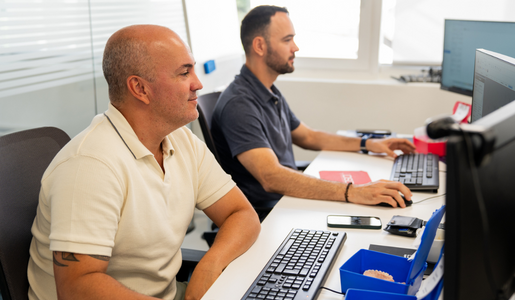
Missing moment 2: procedure planning (after case acceptance)
Once your patient accepts the treatment plan, you then come to Moment 2: specific procedure planning.
Now you need specialists. You might work with one lab that's exceptional at orthodontic planning, a different lab or an implant company for surgical planning. And potentially a third partner for detailed restorative planning.
The key insight: you're not locked into one lab for everything. You might do your exploration (Moment 1) with one lab, your ortho planning (Moment 2) with an aligner company, and your surgical planning (Moment 2) with an implant company's planning service.
This is where you need deep procedural expertise, not big-picture treatment planning. Different skill sets, different partners.
Moment 3: device design
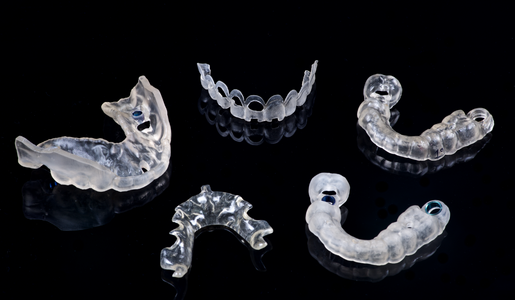
After procedure planning comes device design. You plan the crown lengthening, then someone designs the crown lengthening guide. You plan the implant placement, then someone designs the surgical guide and abutments. You plan the ortho, then someone designs the aligners.
Often, Moments 2 and 3 happen with the same partner, but conceptually, these are different moments requiring different expertise.
Moment 4: manufacturing
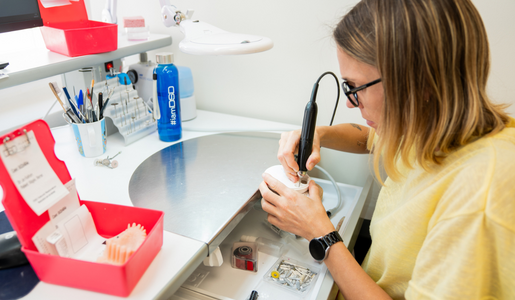
Finally, manufacturing. This is about machinery, materials, positioning devices in blocks or on print platforms, calibrating equipment. Completely different know-how from design.
And as I mentioned earlier, this is where volume and scale become advantages. Understanding what drives lab costs and quality can help you make better decisions about manufacturing partners.
How to choose partners for each moment
Once you understand these four moments, you can evaluate labs completely differently:
Moment 1: Are they hiring dentists? Do they have periodontists, orthodontists, surgeons, prosthodontists on staff? Do they understand interdisciplinary treatment planning and facially driven design?
Moment 2: Do they have deep specialist expertise in the specific procedure you need planned?
Moment 3: Do they understand guided dentistry? Can they design devices that connect back to the diagnostic plan?
Moment 4: Do they have the machinery, volume and quality control systems for consistent manufacturing?
Some labs excel at one moment but not others. The modern dentist understands all four moments and makes strategic partnerships to get the best outcome from each phase.
Work with the DSD Lab
At DSD we pioneered the concept of Moment 1 collaboration: interdisciplinary treatment planning and simulation that happens before case acceptance.
We're the first and still the only lab offering this comprehensive exploration phase, and we support dentists across all four moments with specialized teams for each.
Follow us on Instagram, Facebook, and LinkedIn to stay updated.