
By Christian Coachman
⋅ 4 min read
⋅ Updated Apr, 2026
Article summary
- Patients don't buy treatments – they invest in emotional experiences and their future selves before clinical work begins
- Ethical case acceptance is patient ownership, not persuasion – guide patients to emotionally connect with their problem and your solution
- The comprehensive care paradox – why unfortunately it's easier to sell wrong dentistry (quick fixes) than right dentistry (long-term plans), and how to bridge the gap
- Your real competition – patients' internal priorities like fear, time, holidays, and car payments, not other dentists
- Better communication demands higher ethics – including willingness to earn less when it's best for the patient
There is a moment in every dental practice when our clinical mastery, ethical intentions and years of training come up against a single question: Will the patient say yes?
The tension surrounding this moment, often labeled dental case acceptance, is almost palpable in our profession.
When we talk about increasing acceptance rates, we often feel discomfort. And that’s because for many of us, navigating this space that feels too close to selling still feels ‘wrong’. After all, we entered this world to heal and to build trust, not to persuade.
And yet, before we can help a single patient, we can’t deny that that simple "yes" must happen.
Our true challenge is to acknowledge this moment and its role in educating patients responsibly – that’s what I will talk about in this article.
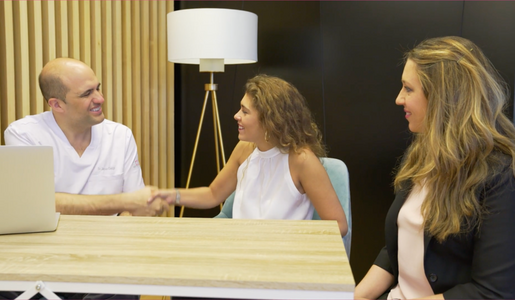
A technician’s insight on ethical case acceptance
My own journey into this space began as a dental technician. I was privileged to be in-house: delivering restorations and watching the final, crucial conversation unfold between the dentist and the patient.
I saw as a highly skilled dentist would use clinical data to explain the need for treatment while the patient simply nodded politely. When they got to this crucial moment, it was often left to chance.I realized that if we could make dentistry a higher emotional priority for the patient, we could unlock the door to better health outcomes for them.
I once approached a partner and asked if he would double my lab fee, if I could help him double his final fee to the patient. He was understandably surprised, and doubted what I told him. "My patients are already complaining," he said.
However, when I prepared an appointment which contained a life-changing story in addition to the images and models, the patient said yes to the new, comprehensive fee.
This was when I understood the central truth: expensive or not expensive is subjective. It all depends on perceived value and emotional priorities in dental treatment.
Patients don't buy dental treatments…
There is a significant mindset shift that needs to occur in dental practice management: patients are not buying dental treatments.
When a patient accepts a plan and writes a check, nothing clinical has begun yet. At this moment, they are saying yes to the experience that has already happened: the story they were told, the safety they felt and their future self. This is why the first and second appointments are such an important moment.
As dentists we are trained to justify our plans with data and technical detail. But we must acknowledge a human truth: major life decisions are made emotionally and only later justified logically. This means that our patients also need to emotionally connect to the problem and the solution.
While we believe our competition is the dentist next door, in reality it is the patient's internal priority list: their fear, time constraints, or perhaps the money they have already allocated to a holiday or a new car.
To truly help, we must make dentistry an emotional ultra-priority. This is the core of effective patient communication strategies.
Reframing case acceptance from persuasion to patient ownership
Ethical case acceptance is not persuasion; it is ownership.
It is not about convincing the patient to say yes. It is about guiding them through an educational process so deep that the answer becomes entirely their own. We must help them to:
Emotionally connect with the problem they face
Feel the long-term consequences of choosing to do nothing
Emotionally connect with the possible beautiful future we offer
Because the patient's needs and best possible outcomes must always drive the conversation, this process keeps ethics front and center.
The ethics of communication
As we embrace these patient communication skills, we inevitably become more influential and charismatic. And the more effective a communicator we become, the higher our ethical standards must be.
Otherwise, these new skills can easily be used to justify treatments that are simply easier, faster or more profitable, rather than what is truly best for the patient’s long-term health.
Being truly ethical when it comes to case acceptance requires a willingness to earn less when that is the right decision for the patient. This willingness is the ultimate safeguard that keeps communication firmly aligned with care, ensuring the patient's interest is always paramount.
The challenge of selling comprehensive, right dentistry
One of the most profound struggles we face in comprehensive dental care is this: It is often easier to sell the wrong dentistry than the right dentistry.
A fast single-procedure solution can be easier to explain, easier for the patient to emotionally justify and often immediately profitable for the practice.
But the right dentistry - the comprehensive, long-term plan that respects systemic health, involves patience and requires vision - is harder to sell. It asks the patient to prioritize a future quality of life over short-term convenience. It requires deeper communication, not stronger persuasion.
It is easier to sell six veneers immediately than a year of orthodontics followed by six veneers, even if the latter is drastically better in twenty years.
It is easier to sell full extractions and an immediate fixed prosthesis than to preserve teeth through a longer, more complex process that provides a much better life in forty years.
The more ideal and comprehensive our treatment plans become, the more critical our ethical case acceptance skills must be. We need to become better communicators to make patients see the value of a long-term benefit that they don't yet see.
The importance of mastering the first appointment
By becoming better communicators, and focusing energy on the first and second appointments, we can serve our patients better and ensure the long-term health and sustainability of our ethical practices.
Master Ethical Case Acceptance: Join The 80% Summit
The 80% Summit is a free, 3.5-hour virtual masterclass replay that provides the practical framework to turn case acceptance a daily reality for your practice. Learn how to bridge the gap between your ethical intentions and treatment acceptance by mastering the communication skills needed to make comprehensive, long-term dentistry an emotional priority for every patient; all while earning 4 CE credits.
Follow us on Instagram, Facebook, and LinkedIn to stay updated.