
By Christian Coachman
⋅ 4 min read
⋅ Updated Aug, 2026
Article summary
Mastering smile design costs more than courses; it also requires time and discipline to develop a trained esthetic eye.
Not investing can lead to weaker results, fewer referrals, slower growth and a gradual decline in confidence and reputation.
Mastery reduces stress and unpredictability, giving dentists clearer evaluation skills and more control over esthetic outcomes.
Strong smile design skills elevate clinical and financial success, attracting higher-value cases and creating more natural, predictable results.
Dentists often ask me about the cost of learning smile design – they want a clear, measurable figure. But while the financial side is definitely a factor when considering your investment in learning smile design, in reality it’s only a small part of what is involved.
The real investment involves time, discipline, energy and the willingness to look at your own work with a new perspective – as well as stepping back to consider the cost of not investing. This one appears slowly: it shows in your patient satisfaction, your reputation, your stress levels, and your long-term income. Many dentists feel these consequences for years before they recognize the pattern.
So instead of asking “How much does smile design training cost,” the more important question I'll focus on here is:
What does it really take to master smile design — and what happens when you avoid that journey?
Four components of smile design training costs
As I mentioned above, the financial investment is the most visible part of the journey. But the true investment to master smile design includes hours of refinement, personal growth and mindset changes that influence every case you take on.
Here are the four types of investment:
1. The financial cost
Real smile design training doesn’t come from scattered tips, quick videos or isolated demonstrations. While those resources can certainly inspire you and offer tips, they can't give you the structured, step-by-step education required to actually improve your esthetic results.
To develop a trained eye, you need a comprehensive course that guides you through the principles, shows you how to apply them and provides a framework you can return to in every case.
Dentists understand this when they take training courses in areas like occlusion or full-mouth rehabilitation. They know the risks of trying to learn those disciplines through shortcuts. Smile design is no different – its influence on a patient’s appearance, confidence and identity is too significant to leave to chance.
2. The time cost
Time is the investment most dentists don’t fully account for when they think about smile design training cost. While a course will introduce you to the concepts, your artistic eye continues to develop afterwards when you put them into practice.
This happens when you return to a smile design and compare it with natural references, and when you stay a little longer refining a mock-up or adjusting a provisional because something about the shape doesn’t feel right yet. Over time, these small decisions accumulate and begin to sharpen your perception.
The more time you spend observing, analyzing and practicing, the more predictable and natural your results become.
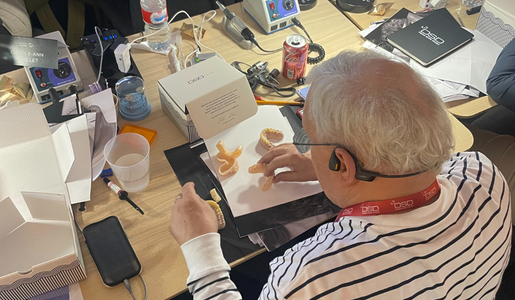
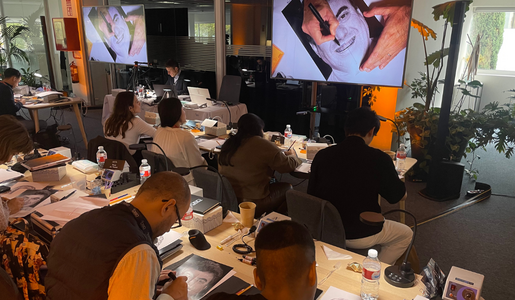
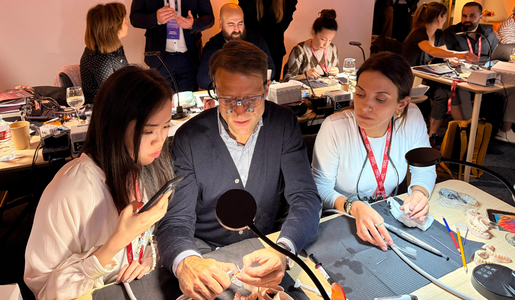
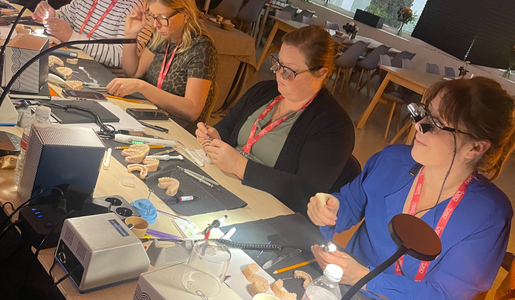
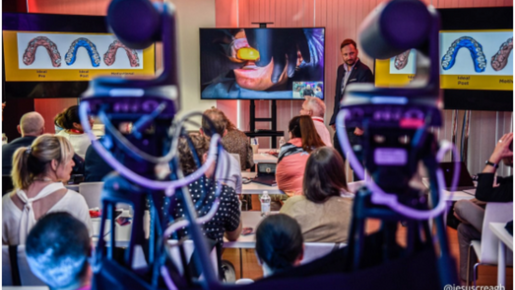
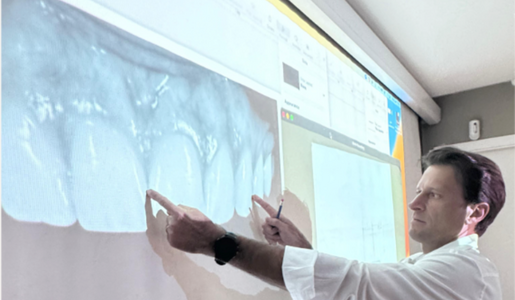
Above: swipe to see participants practicing their smile design skills at our Designing Smiles course in Madrid.
3. The energy and discipline cost
Every dentist experiences a moment when their understanding grows faster than their execution. You know what looks natural and why a certain design works, but when it comes to translating that into your hands — consistently — you run into difficulty.
This stage requires discipline because improvement is rarely dramatic. It shows up in the subtle shifts you make: the way you adjust a line angle, choose to revisit a contour or decide to reshape something even when the patient will never notice the difference.
Mastery comes from the discipline of doing small things well over and over again and there is no shortcut for this part of the journey. It requires energy, patience and a steady commitment to doing things with intention, not just completion.
4. The cost of humility
Smile design requires a level of honesty that goes beyond technical competence. It demands that you evaluate your own cases with a new level of scrutiny and acknowledge when something looks acceptable but not truly natural.
Humility is often the hardest part of the investment — especially for dentists who have already built successful careers. When you have years or decades of experience, it is not easy to admit that your artistic eye or your design skills might still have room to grow.
The dentists who grow the fastest are the ones who remain curious. They give themselves permission to learn again, even when others see them as experts.
The high cost of not investing in smile design
Deciding not to invest in smile design training also carries a cost. It usually reveals itself slowly and often shows up in areas dentists don’t immediately associate with smile design skills.
Let's look at four consequences you might come up against by choosing not to improve your smile design skills:
- Your patients are satisfied... but never amazed
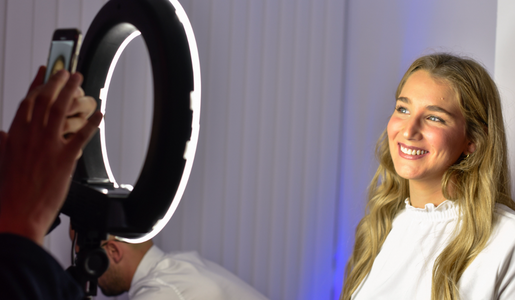
This happens when you see results that are good or great...but not outstanding. The patient is happy but not deeply moved. The smile is better than before but there's something about it that doesn’t fully achieve harmony or naturalness.
While patients who love their smiles become advocates – and refer – "good enough" results can mean a practice grows slowly because the emotional impact isn’t strong enough to spark referrals. This invisible gap affects long-term growth more than most dentists realize.
- Your reputation and confidence don’t grow
A smile may be clinically correct, yet still not look natural or expressive. When dentists share before-and-after images that lack artistic refinement, the impression they create is not always the one they intend. Other clinicians notice it – and so do esthetically aware patients.
Over time, this creates internal frustration. You sense that your results could be better but without a system or a trained eye, it’s difficult to know where to improve. That uncertainty slowly affects your confidence.
Smile design training brings clarity to this process, giving you the tools to analyze, correct and refine, instead of relying on instinct and hoping the outcome aligns with your expectations.
- You suffer financial consequences
Smile design is one of the few areas of dentistry where patients feel confident evaluating results. While they don’t know how to judge a root canal, they can tell immediately whether a smile looks natural or artificially created – even without clinical knowledge.
If your smile design skills prevent you from delivering optimal esthetic results for your patients, high-value esthetic cases can become harder to attract. Over a career, this represents a significant financial cost.
- Your cases are unpredictable
Without a solid foundation in smile design, esthetic cases can often feel unpredictable. When you receive lab work that doesn’t match your vision, you struggle to articulate why or how to adjust it; you sense that something is off but translating that into constructive feedback becomes difficult. This leads to more adjustments, longer appointments and more tension during esthetic treatments.
Strong smile design skills can reduce this uncertainty. You know what to look for, what to correct and how to guide the process. Instead of navigating each case by trial and error, you move through the workflow with clarity and control.
Why choose to invest in smile design?
Dentists who invest in mastering smile design gain technical ability, but also a level of clarity and confidence that affects every esthetic case they treat. Their provisionals begin to look closer to their finals, their communication with the lab becomes more precise and their patients trust their vision. The entire workflow becomes more predictable and less stressful.
Most importantly, mastering smile design creates a sense of calm control — the feeling that you know what you’re doing, why you’re doing it and how to adjust when something isn’t working.
How to start the journey
While smile design mastery is a long-term process, it doesn’t need to feel intimidating. A practical way to begin is by choosing one structured philosophy and sticking with it.
From there, focus on making one or two improvements per case rather than trying to transform everything at once. Over time, these small improvements create major shifts in your results. Share your work with mentors, ask questions and stay open to feedback. Revisit principles regularly. Use technology intentionally — not as a shortcut, but as a way to refine your eye.
If you’re ready to move from concept to mastery, consider the next step: Designing Smiles with Christian Coachman. This hybrid course is made up of three modules with a mix of online and in-person learning, and comes with 2-year mentorship access with Christian Coachman inside DSD Online.
If you’re committed to becoming the esthetic clinician patients turn to for beautiful, authentic smiles, I invite you to explore whether this course aligns with the next stage of your growth.
Follow us on Instagram, Facebook, and LinkedIn to stay updated.