Rubber Dam vs. Relative Isolation for Veneers: A Transparent Comparison

Article summary
- The case for the rubber dam: proponents argue it's a safety, biological, and chemical barrier that improves visibility, precision, and predictability, going well beyond simple moisture control.
- The case for relative isolation: clinicians with decades of experience report strong long-term results with relative isolation alone, as long as the prep stays in enamel and moisture is meticulously managed.
- The synthesis: a lot of the group felt most failures trace back to occlusion and prep design, not isolation technique. Skill, more than the tool, seemed to be the deciding factor.
I recently asked a question to a group of some of the most well-read, experienced dentists in the world. As a lab owner and clinician, I wanted to give our dentist clients the most realistic instructions possible. So I messaged the group:
"I see a big hype about cementing veneers with rubber dam complete isolation, but every time I visit some of the best dentists in the world, I see them bonding veneers without a rubber dam complete isolation. So what is the verdict or consensus? Does it really make a difference? What is reasonable?"
The response was immediate, and passionate. Within hours, the group had split nearly 50-50: those who see the rubber dam as a non-negotiable safety barrier, and those who believe meticulous relative isolation is more than enough for clinical longevity.
The Case for Exquisite Dedication
For the rubber dam camp, this isn't really a conversation about bond strength. It's about a total commitment to clinical excellence and safety.
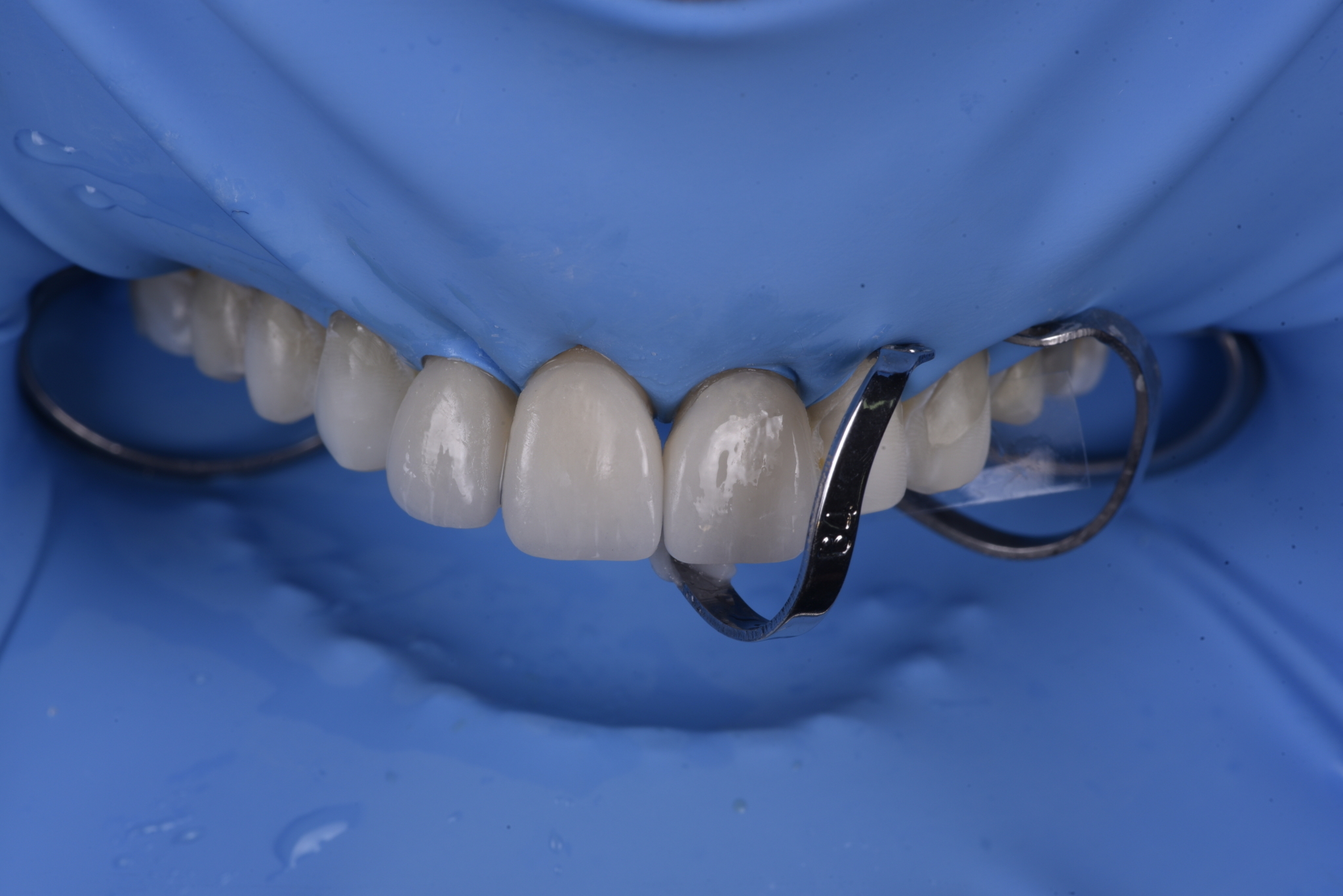
"The rubber dam is not merely moisture control... It is a safety, biological, and chemical barrier, especially relevant when many dental materials state: 'Avoid contact with mucosa; if contact occurs, seek medical advice.' By creating a controlled clinical environment, it ensures better light, precision, predictability, and higher treatment quality."
Dr Orlando Alvarez
That same commitment came up again as a theme of total control. One contributor said real control only comes with a dam, having bonded cases both ways over the years himself. Another described a similar shift after around a decade of using a dam: bonding felt like a completely different experience once it became standard practice.
"Full rubber dam, every veneer case, 10 years. The only real cost is time; everything else is clearly better with it.
What I'd question is the metric. Everyone talks about debonding, but with minimal/vertical preps you've got so much enamel that debonding is essentially a non-issue either way. So the 1-in-1000 numbers don't settle much. That's the failure that almost never happens. The one that does is slower: marginal degradation and staining, a few years down the line. And it sits on the tooth side, the weaker of the two bonds, which is exactly where moisture, even the patient's breath, gets you.
Same recipe as always: communicate, charge accordingly, take the time, use the dam."
Dr Guido Bracchetti
One contributor framed the dam in terms of what it does for the clinician, not just the restoration: it's a source of peace of mind that decreases stress during the procedure, and in experienced hands, doesn't add much time.
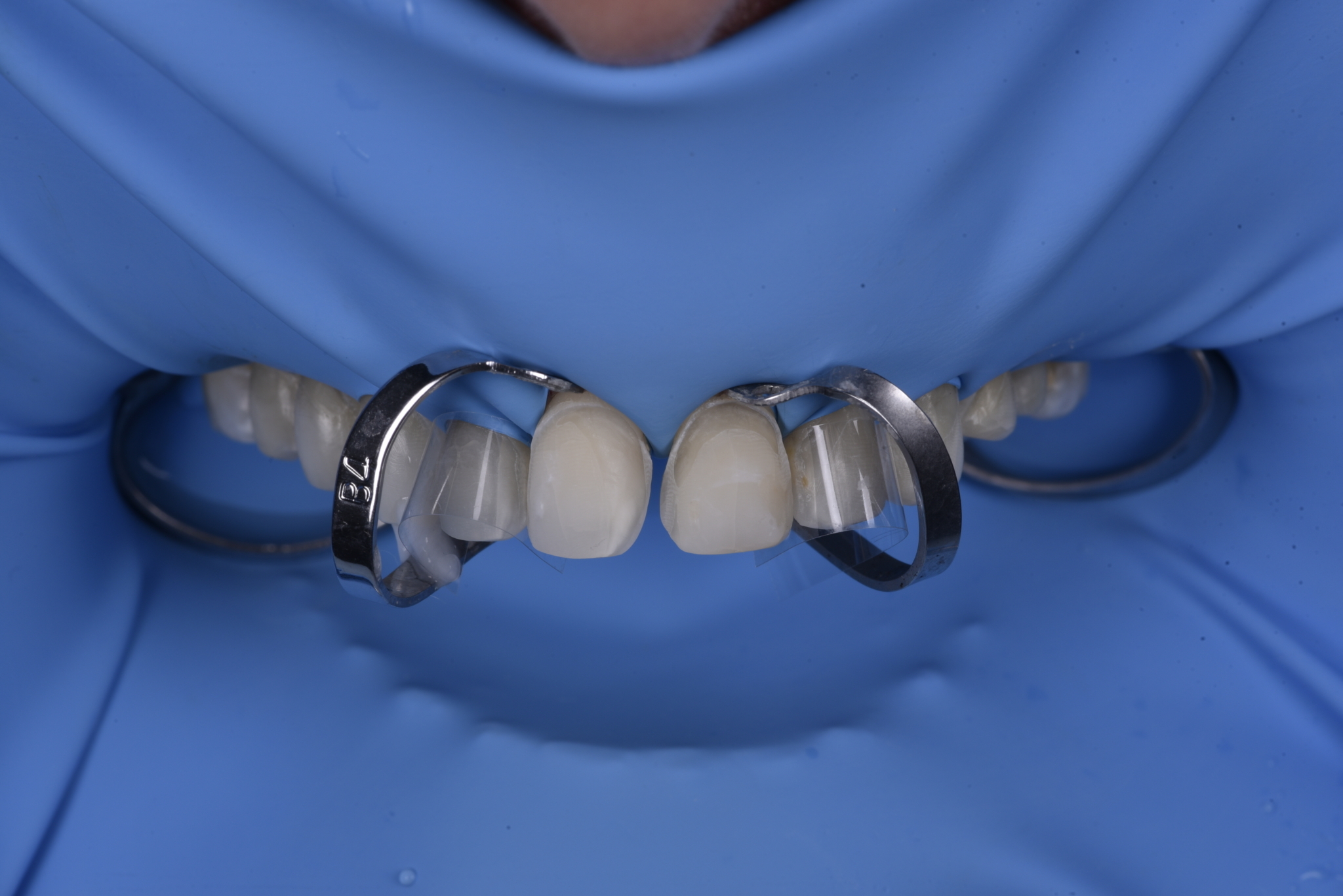
How the dam was applied often came down to case size, too. One contributor, for example, said one to four veneers could get away with Teflon or Exposyl, but anything bigger called for a full dam, and that the tissue tends to look healthier almost immediately once a dam is involved.
Beyond individual experience, one clinical in-situ study came up in the discussion. It found that without a rubber dam, just the humidity and temperature shift from exhaling can cut bond strength roughly in half. The contributor who raised it added a caution alongside it: sure, we usually get away without a dam, but if a case fails, don't blame the material or the protocol for it.
That same contributor made another point worth sitting with: we obsess over the bond to indirect materials, debating things like heating silane or "can't bond zirconia," while forgetting every case has two bonding interfaces. Done right, they argued, the bond to the ceramic is usually stronger than the bond to the tooth, especially without a dam. (Study linked in "Read more" below.)
The Reality of Clinical Longevity
On the other side, plenty of clinicians with 30-plus years behind them see it differently. If the prep stays in enamel, they argue, the bond is already strong enough that the absolute seal of a dam is overkill, "over-engineered" for what the case actually needs.
"I like to say that 'absolute is moisture control, the rest is relative.' The majority of veneer cases can be cemented with relative isolation. The literature is not conclusive as to the absolute need for rubber dam. Most of my cases were cemented without rubber dam and have been behaving well for decades. Failures—when they occur—were not due to lack of isolation but usually due to occlusal overload."
Dr Marcelo Calamita
For this camp, the goal was always moisture control, and the dam was one reliable way to get there, not the only one. One contributor put it plainly: efficient moisture control, whether through complete or partial rubber dam technique or neither, mattered more than treating full isolation as mandatory.
That thinking carried over into protocol more broadly. If something's worked reliably for decades, why change it just because a newer material's come along?
Case volume backed this up too. One contributor pointed to his own numbers: where enamel is preserved, debonding is rare enough that the dam becomes genuinely optional, he said, citing just one debonding across more than 1,000 veneers placed without one, with a parallel ongoing study of 10,000 veneers over ten years showing a similarly low rate.
One contributor described a slower shift in his own practice, moving toward no-dam cases as his experience and his team's workflow improved, while keeping the dam on standby for harder cases: bleeding, tricky moisture control, heavy dentin exposure, or old composite restorations.
One contributor went further still, relying on partial isolation and retraction cord alone for 25-plus years with solid results. Another put it more conditionally: the dam is theoretically ideal, they said, but cotton rolls, careful isolation, and good suction can get you to a similar place in practice.
The Synthesis: Skill Over Tools
As the debate wound down, a middle ground started to emerge. Isolation, a lot of people agreed, is just one variable on a much longer list that decides whether a restoration lasts.
One contributor laid out the logic plainly: in theory, a rubber dam should give a better outcome, and if it took no longer than relative isolation, everyone would already be using it. But, he added, most failures actually come down to occlusal factors, not the isolation method, an observation echoed elsewhere in the discussion.
That's why, in his view, a skilled clinician who's on top of everything else can do just fine without a dam, while a sloppy prep will underperform even with one. Another contributor made a similar point in his own words: what matters in the end is clinical longevity, not which method got you there, since every practitioner's skill set is different regardless of technique.
One opinion came up a lot: don't judge a clinician for using, or not using, a dam. One contributor framed it as one more preventive step toward safety, not a guarantee of quality, since mistakes remain possible either way. Another felt every dentist should be able to apply a rubber dam when a case calls for it, even if they've stopped judging colleagues who choose not to.
The point was raised about the practical toll of bigger cases, 12 to 20 units: clamp pressure often means extra palatal anesthesia, and dentin dehydration can bring on post-op sensitivity. Even so, the same contributor said he'd always block out the time for a dam when the case allowed it.
For many in the discussion, the broader takeaway was simple: no single technique fits every case, or every clinician.
Pros and Cons: Rubber Dam vs. Relative Isolation for Veneer Cementation
Based on the clinical debate among members of the forum, here's how the trade-offs between full isolation with a rubber dam and the clinical reality of relative isolation stack up.
| Feature | Rubber Dam (Full Isolation) | Relative Isolation (Cords/Cotton/Teflon) |
|---|---|---|
| Bond Strength | Highest potential: without a dam, humidity and temperature change from exhaling alone can cut bond strength in half; studies show greater bond strength with a dam. | Sufficient in practice: clinicians report cases behaving well "for decades" without a dam; one debonding in 1,000+ veneers with no dam; "very few debonds" when cementation protocol is right. |
| Clinical Control | Superior: better light, precision, predictability, higher treatment quality; control, visibility, accuracy, detail; full control achieved only with dam + magnification; brings peace of mind and less stress. | Workable with the right protocol: majority of veneer cases can be cemented with relative isolation, literature not conclusive on the absolute need for a dam; requires learning to manage moisture and "have peace of mind" without full isolation; efficient moisture control achievable with partial dam or none. |
| Safety | Acts as a safety, biological, and chemical barrier, relevant since many materials warn against mucosal contact; "one more preventive step" for safety. | Not directly addressed by any comment. |
| Efficiency | Time is the one real disadvantage: clamp pressure requires extra palatal anesthesia, and dentin dehydration can cause post-op sensitivity; becomes "painful" across 12–20 teeth. | Clinicians who work for others often must shift from full to partial or no isolation as a practical matter; in experienced hands a dam "isn't so time-consuming," which some read as suggesting its absence saves even more time. |
| Precision | Better light, precision, predictability; control, visibility, accuracy, detail. | Not directly addressed. |
| Long-term Margins | Protects against marginal degradation, staining, stress over time. | Cases cemented without a dam "behaving well for decades"; failures, when they occur, trace to occlusal overload rather than isolation method. |
| Patient Comfort | Clamp pressure requires extra palatal anesthesia; dentin dehydration can cause post-operative sensitivity. | Not directly addressed. |
Across the discussion, the rubber dam camp saw it as the safest, most predictable route to a strong bond. The relative isolation camp saw their approach as just as valid, in the hands of an experienced operator who takes moisture management seriously.
As one contributor put it, reality and practicality sometimes beat hard scientific facts, as long as you're managing everything else, occlusion, prep design, with just as much care.
Closing Thoughts: Rubber Dam or no Rubber Dam?
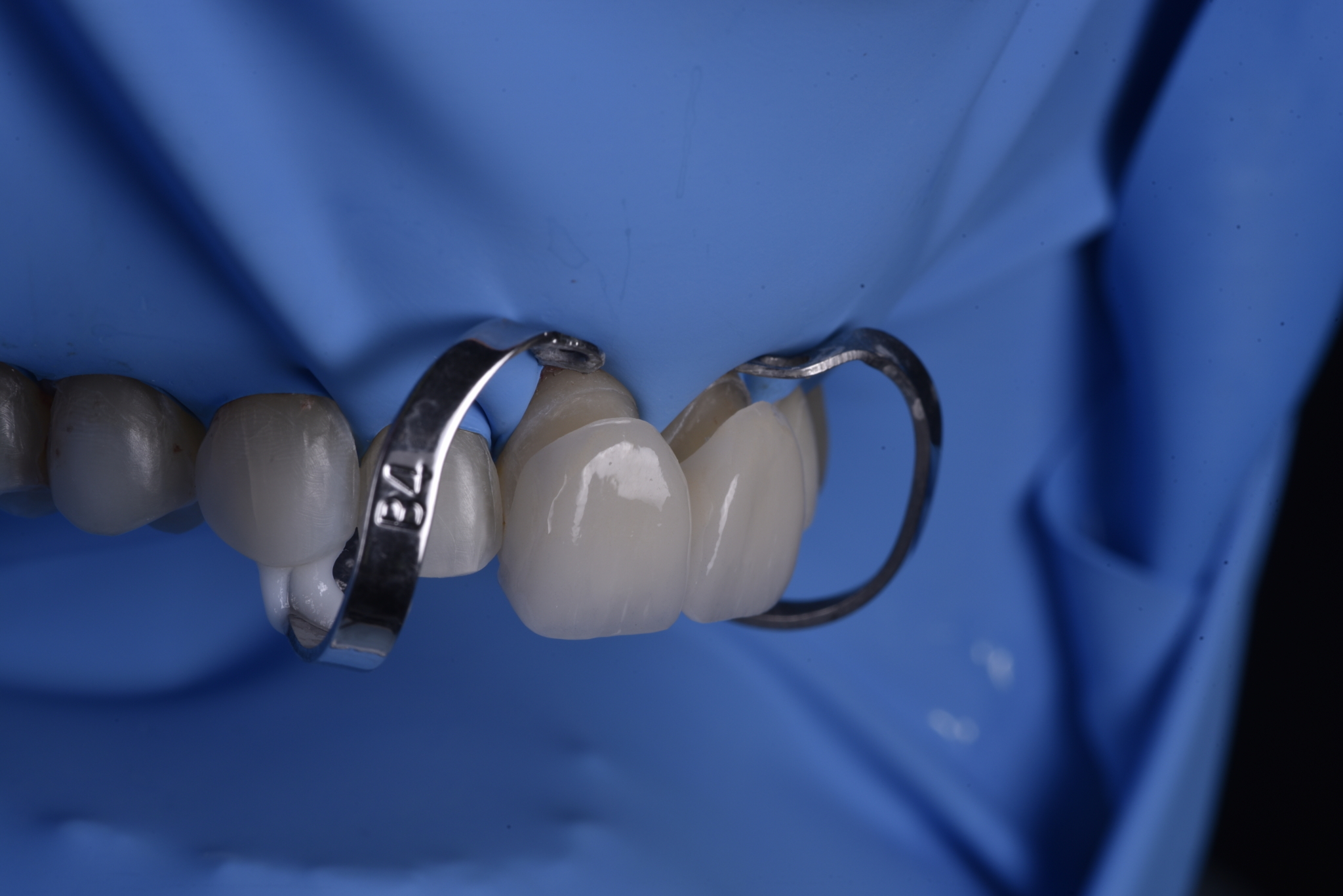
This debate points to something a lot of the group already knew: there's often a gap between hard scientific data and long-term clinical reality.
The literature does favor the rubber dam for maximizing bond strength and preventing marginal degradation. But the anecdotal experience from some of the world's most respected clinicians suggests success is multi-factorial, and isolation method is just one piece of it.
As contributors on both sides pointed out, a rubber dam is one variable in a much bigger equation, alongside occlusion, prep design, and the skill of both the dentist and the ceramist.
At the end of the day, every clinician wants the same thing: a predictable, long-lasting, comfortable outcome for the patient. Whether you get there with the absolute seal of a dam or the meticulous organization of relative isolation is still up for debate, and probably always will be. It depends on your philosophy, your hands, and the case sitting in your chair.
Read more:
Falacho RI, Melo EA, Marques JA, Ramos JC, Guerra F, Blatz MB. Clinical in-situ evaluation of the effect of rubber dam isolation on bond strength to enamel. J Esthet Restor Dent. 2023;35(1):48‒55. doi:10.1111/jerd.12979
Heintze SD, Rousson V, Mahn E. Bond strength tests of dental adhesive systems and their correlation with clinical results – A meta-analysis. Dent Mater. 2015;31(4):423‒434. doi:10.1016/j.dental.2015.01.011
Mahn E, Rousson V, Heintze S. Meta-Analysis of the Influence of Bonding Parameters on the Clinical Outcome of Tooth-colored Cervical Restorations. J Adhes Dent. 2015;17(5):391‒403. doi:10.3290/j.jad.a35008
Imburgia M, Lerner H, Mangano F. A Retrospective Clinical Study on 1075 Lithium Disilicate CAD/CAM Veneers with Feather-Edge Margins Cemented on 105 Patients. Eur J Prosthodont Restor Dent. 2021;29(1):54‒63. doi:10.1922/EJPRD_2248Mangano10
What's next?
You're reading an article like this one because you hold yourself to a high standard, and you want to be the best restorative dentist you can be.
That same standard applies one step earlier in the workflow: choosing a restorative material that fits the case in front of you, not defaulting to habit. There's no best material. There's only the right material for the case in front of you.
We built a short online tool for restorative dentists to work through exactly that: six questions, about 60 seconds, for monolithic restorations. The decision logic behind it isn't a formula pulled from a brochure, it's how our restorative team actually reasons through a case, written down. Angelo Raphael, our Clinical Director of Restorative Dentistry at the DSD Planning Center and DSD Lab, built the materials matrix it draws on, and the tool itself came out of two long recorded sessions where we argued through that logic line by line before any of it was written.
Take the 60-second materials assessment →